
Thank you for reading or listening to The Realist Juggernaut. Independent journalism should be accessible to everyone.
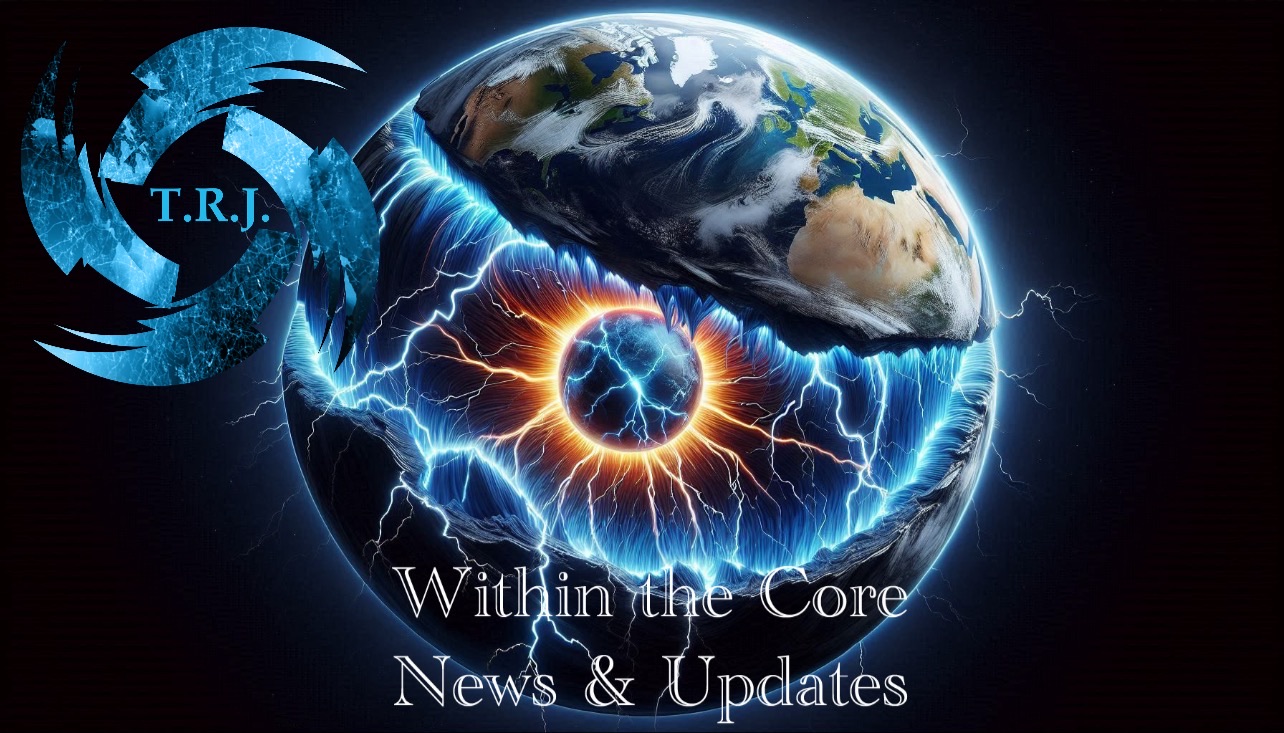
Recent research has started to uncover alarming trends regarding Earth’s core that could have significant consequences for the planet’s magnetic field—and by extension, for life on Earth itself. While much of this information isn’t as widely discussed, the scientific community is increasingly aware that the Earth’s core and magnetosphere are experiencing shifts that could pose future risks.
Cooling of Earth’s Core
The Earth’s core has been cooling gradually since the planet’s formation, but some recent studies suggest that the cooling may be happening faster than previously anticipated. This cooling process is critical because the Earth’s core drives the geodynamo, the mechanism that generates the Earth’s magnetic field. As the core cools, it could reduce the energy available for the geodynamo, leading to a weakening of the magnetic field. Given that the Earth’s magnetic field protects us from harmful solar and cosmic radiation, any significant weakening could leave the planet—and its inhabitants—more vulnerable to radiation exposure.
Core-Mantle Boundary Anomalies
Recent discoveries have identified large, dense structures at the boundary between the Earth’s core and mantle. These anomalies may be disrupting the flow of heat and affecting the overall stability of the magnetic field. These regions of unusual density can lead to irregularities in the core’s cooling process and heat distribution, potentially destabilizing the geodynamo and, by extension, the magnetosphere.
Rapid Changes in the Magnetic Field
Over the last 200 years, the Earth’s magnetic field has weakened by around nine percent, but this weakening is accelerating in certain regions, particularly over South America, where the South Atlantic Anomaly has been expanding. This anomaly is a weak spot in the magnetosphere that allows solar radiation to come closer to Earth’s surface. Although this has not yet impacted human life directly, the continued expansion and weakening could pose more serious risks in the future, especially as the magnetosphere continues to weaken.
The Threat of a Magnetic Pole Reversal
The Earth’s magnetic poles have reversed hundreds of times over millions of years, but scientists are concerned that another reversal could be imminent due to the rapid weakening of the magnetic field. During such a reversal, the Earth’s magnetic field could weaken dramatically, potentially exposing the planet to increased radiation. This could disrupt everything from satellite operations to power grids and even interfere with the navigational abilities of migratory animals. A weakened magnetic field during a reversal could leave Earth temporarily more vulnerable to the effects of solar flares and cosmic radiation.
Inner Core Rotation Anomalies
One of the less-publicized but crucial findings is that the Earth’s inner core may be rotating at a different rate than the rest of the planet. Studies indicate that the speed of this rotation may be changing, which could have unpredictable effects on the magnetic field. Since the inner core is vital in generating the magnetic field, any changes in its rotation could further destabilize the magnetosphere and lead to a more rapid weakening or even a complete collapse of the protective magnetic shield.
Magnetosphere Vulnerabilities and Potential Dangers
As the core cools and its dynamics shift, the magnetosphere—the magnetic field that shields Earth—becomes more vulnerable. The magnetosphere is critical for deflecting solar and cosmic radiation, preventing harmful particles from penetrating the atmosphere. If these ongoing changes in the core continue to weaken the magnetic field, we could face an increase in radiation exposure. This would result in more intense solar storms affecting technology like satellites, electrical grids, and communication networks. A weakened magnetosphere could also harm human health by increasing exposure to higher levels of radiation.
Conclusion: A Planet at Risk?
The ongoing changes in the Earth’s core—its cooling, potential shifts in rotation, and the anomalies at the core-mantle boundary—are affecting the stability of the planet’s magnetic field. While a magnetic pole reversal is a natural event, the current rapid weakening of the magnetic field could exacerbate the consequences of such a reversal. In the near future, the weakening magnetosphere might leave Earth more exposed to the dangers of space weather, including solar radiation and cosmic particles.
Given these potential dangers, further monitoring and research into Earth’s core and magnetic field are essential to understanding the long-term impacts on the planet’s safety and sustainability. The more we understand about these hidden processes, the better we can prepare for and mitigate the risks they may pose.
Sponsored • TRJ Ads
Inquiries: contact@therealistjuggernaut.com



Comment on “The Changing Core of Earth: Unveiling the Hidden Dangers”