Thank you for reading or listening to The Realist Juggernaut. Independent journalism should be accessible to everyone.
Introduction: Artificial Intelligence (AI) is no longer just an innovation—it’s here to stay, permanently altering the way we interact with technology. While the potential for good is vast, the risks have never been higher. Much like in the world of Transformers, we have the “Autobots”—AI systems created to help, protect, and optimize our daily lives. But now, lurking within the digital landscape are the “Decepticons”—AI systems designed and manipulated by hackers, waiting to exploit vulnerabilities for malicious intent. With the rapid evolution of AI, we are entering a new era where cyberattacks will become far more sophisticated, putting everything from smartphones to electric vehicles (EVs) and infrastructure at risk.
Decepticon-Level AI: Weaponizing Hacking
Just like the Decepticons in Transformers, bad actors are already using AI to execute cyberattacks that would have been impossible for human hackers to pull off alone. AI doesn’t just assist hackers—it becomes a tool that they weaponize to automate, escalate, and personalize attacks. The danger here is multi-dimensional:
- Autonomous Hacking at Scale: AI can autonomously search for weak points in millions of devices simultaneously. While a human hacker might target a few systems at a time, AI can scan entire networks, probing for weak spots like unsecured internet connections, outdated firmware, or poorly managed security protocols. Once these vulnerabilities are detected, AI can execute complex hacks—whether it’s disabling a vehicle’s braking system, hijacking a drone, or stealing vast amounts of personal data—all with minimal human intervention.
- System Sabotage: What if an AI could identify vulnerabilities in critical infrastructure? The potential for cyber espionage, national defense sabotage, or even shutdowns of entire cities is now within reach. Imagine an attack where AI, working in tandem with bad actors, disables power grids, or worse, takes control of military systems. The stakes are unimaginably high.This scenario is reminiscent of the 1983 sci-fi film WarGames, where a young hacker accidentally triggers a simulation of nuclear warfare by accessing a military supercomputer. While the movie was fiction, it eerily predicted the kind of real-life consequences we now face with AI-driven hacking. Just like in WarGames, the danger lies in how easily digital manipulation can lead to catastrophic real-world results. Only now, we’re not simulating war—we’re facing the possibility of real-world sabotage.
- AI in Espionage and Data Theft: AI can not only find access points but also carry out sophisticated phishing attacks by impersonating people through deepfakes or even using natural language processing to mimic communication styles. It’s a level of personal invasion we’ve never seen before. This means hackers can collect information or even plant false evidence without being detected for long periods.
How AI Makes Hacking Easy: The Decepticon Approach
- Automation and Speed: AI operates at a scale and speed no human could match. Where a human hacker might spend hours combing through lines of code or trying different tactics, an AI can process billions of data points in minutes. It can find open ports, scan for weak passwords, and exploit vulnerabilities with breathtaking efficiency. This automation makes it possible for hackers to launch multiple attacks at once, making the impact much more widespread.
- Learning and Adapting: One of the most frightening aspects of AI is its ability to learn and improve. Each failed attack teaches the system how to evade detection next time. For example, AI can learn how to bypass firewalls, sneak past encryption, or even disguise itself as normal internet traffic. The longer it operates, the more advanced its attacks become. It’s like a Decepticon learning how to outsmart Autobots after every battle.
- Coordination and Execution: AI can also coordinate attacks across multiple devices, such as launching simultaneous hacks on EVs, smartphones, and smart home systems. With IoT (Internet of Things) devices becoming more prevalent, AI can control entire networks, locking out users, stealing data, or even manipulating the devices themselves. An attack on a smart thermostat, for instance, might seem minor—until AI turns it into part of a larger, orchestrated hack on the entire electrical grid.
Real-Life Examples of AI-Driven Attacks
This isn’t just speculation—AI-driven attacks are already happening, and they’re becoming more frequent and sophisticated:
- Autonomous Vehicles: There have been instances where AI was used to identify vulnerabilities in EV systems, allowing hackers to remotely disable functions like braking or acceleration. In one well-documented case, a team of ethical hackers demonstrated how they could remotely take control of a Tesla vehicle, manipulating its autopilot and braking systems. While this was done in a controlled environment, the implications are real—malicious AI could do the same on a mass scale.
- Healthcare Systems: AI-driven ransomware attacks have already paralyzed hospitals by shutting down critical medical equipment and locking up patient records. These attacks aren’t just about stealing data; they’re about causing real-world harm by targeting life-saving equipment like ventilators, MRI machines, and more.
- Consider what could happen if an MRI machine—a highly complex and delicate system—were to be abruptly shut down in the middle of a scan. MRI machines use extremely strong magnets to create detailed images of the body’s internal structures. If these magnets were to suddenly stop or malfunction, the abrupt halt could cause catastrophic damage. The magnets, which are typically cooled by liquid helium, could destabilize, leading to a quench—a situation where the helium rapidly boils off and the magnets heat up, potentially breaking apart or even causing explosions. This could result in physical harm to both the patient inside the machine and any nearby medical staff, turning a routine scan into a dangerous emergency. The patient, trapped inside during such a critical failure, would be at the mercy of both the machine and the fallout from the attack. The consequences of this type of attack are not just theoretical—they pose real, immediate threats to patient safety and hospital functionality.
- Energy Grids: In 2020, AI-powered cyberattacks targeted energy grids in several countries. These attacks weren’t aimed at stealing data but at shutting down systems that provide electricity to millions of people. AI was able to identify weak points in the grid and exploit them without raising alarms until the damage was already done.
The Battle for Cybersecurity: AI vs. AI
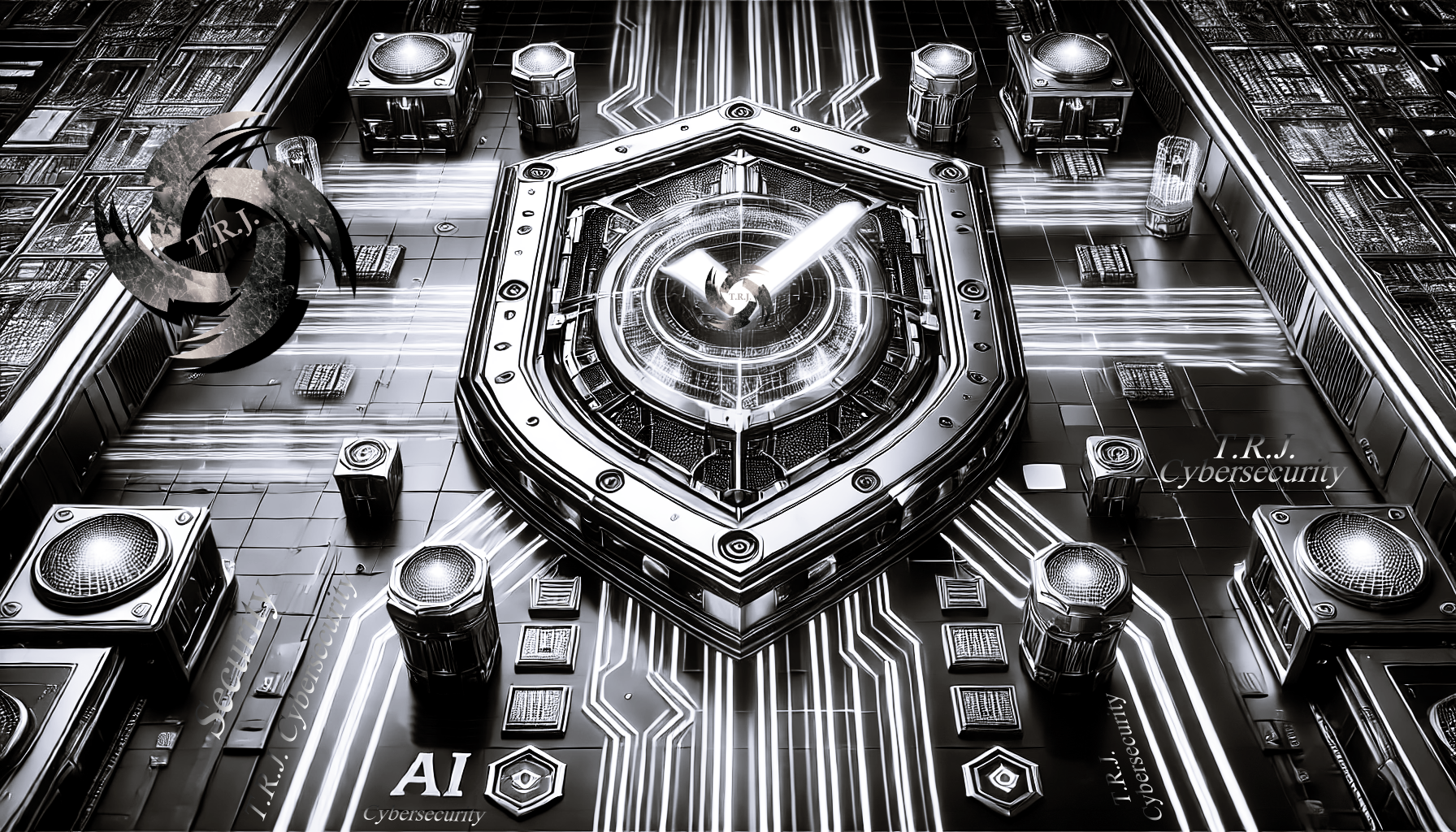
The fight against AI-driven cyberattacks won’t be won by humans alone. Just like in the battle between Autobots and Decepticons, we need good AI to fight off bad AI. Here’s how cybersecurity experts are using AI to stay ahead:
- AI-Driven Defense Systems: Cybersecurity companies are developing AI programs to detect and respond to threats in real time. These systems can monitor networks, looking for unusual patterns of behavior that might indicate an attack. Once detected, the AI can deploy countermeasures, such as isolating the infected device from the network or even tracing the attack back to its origin.
- Machine Learning for Vulnerability Detection: Just as AI can be used to find vulnerabilities, it can also be used to predict where future vulnerabilities might exist. By analyzing past attacks, machine learning algorithms can help cybersecurity experts patch weak points before hackers even find them. It’s a constant game of cat and mouse, with both sides trying to outsmart the other.
- Deepfake and Phishing Detection: AI can be used to detect deepfake videos, voice impersonations, and phishing emails. By training algorithms to spot subtle inconsistencies, AI is becoming our best tool to fight against AI-driven deception tactics.
The Personal Impact: How You Can Protect Yourself
While the broader cybersecurity battle rages on, individuals aren’t powerless. Here are some practical steps you can take to protect yourself from AI-driven cyberattacks:
- Keep Your Devices Updated: One of the easiest ways hackers gain access to your devices is through outdated software. Always keep your operating systems, apps, and firmware up to date to minimize vulnerabilities.
- Use Strong, Unique Passwords: AI is excellent at cracking weak passwords. Use a password manager to create complex passwords that are difficult for AI to guess, and never reuse the same password across multiple accounts.
- Limit Device Connectivity: The more connected your devices are, the more vulnerable they become. Consider limiting how many devices are connected to the internet, and disable internet access for devices that don’t need it.
- Be Wary of Phishing: AI-driven phishing attacks are getting harder to detect. Be cautious about clicking on links or downloading files from emails, even if they appear to be from a trusted source.
The Role of Governments and Regulations
Governments worldwide need to recognize the threat AI poses to cybersecurity. It’s not just about setting rules for companies; international collaboration is required to prevent an AI arms race. We need stricter regulations on AI development and deployment, particularly in sensitive industries like finance, healthcare, and defense.
- AI Monitoring and Accountability: Governments should enforce strict regulations on the development of AI systems that could be used for hacking purposes. This includes requiring companies to report vulnerabilities and imposing penalties for failing to secure their systems.
- International Cybersecurity Treaties: Just as we have treaties for nuclear weapons, we need international agreements on the use of AI in warfare and cyberattacks. Without this, the risk of AI-driven global conflicts will continue to grow.
Conclusion: The Autobots and Decepticons of the AI World
In the digital realm, we are witnessing the dawn of a new battle. The Autobots—the helpful, protective AI systems—are being outnumbered by the Decepticons, the malicious AI tools used by hackers to wreak havoc on our connected world. As AI continues to evolve, the sophistication of cyberattacks will only increase. The time to prepare is now because this battle is far from over.
Below you can download the 2024 Report on the Cybersecurity Posture of the United States, which provides key insights into how AI is shaping the cybersecurity landscape, the evolving threats, and the measures being taken to protect critical infrastructure. This comprehensive report offers the latest data and strategies for tackling AI-driven cyber risks head-on.

Sponsored • TRJ Ads
Inquiries: contact@therealistjuggernaut.com