
WHEN PUBLIC KINDNESS HIDES PRIVATE CRUELTY
I’ve been spending time with friends, friends of friends, and certain relatives — not in the shallow, small-talk sense, but enough to see what their lives actually look like when there’s no script, no stage, and no spotlight. It’s one thing to see how people act at a barbecue, in a store, or at a social gathering. It’s another to witness them in their own homes, in their natural environment, when the performance fades. And what I’ve seen has been jarring. Some people who seem warm, generous, and almost impossibly polite in public can turn into cold, controlling, or outright cruel versions of themselves the moment the public gaze disappears. It isn’t the occasional bad day or the normal irritations of life — it’s a sustained two-facedness that operates like a switch being flipped, a deliberate division between the public persona and the private reality.
What shocks me is how invisible this is to the outside world. You could sit next to some of these people at dinner and never have the faintest idea of what they are capable of behind closed doors. Their reputations are pristine. Their public acts are all smiles, gracious gestures, and carefully chosen words. Yet in private, they are capable of withering comments, constant undermining, petty punishments, and calculated unfairness toward those closest to them. And here’s the part that most people will ignore — this isn’t just bad manners or personal quirks. It is a psychological dynamic rooted in human behavior, one that thrives in the shadows of social trust and works precisely because most people never look too closely.
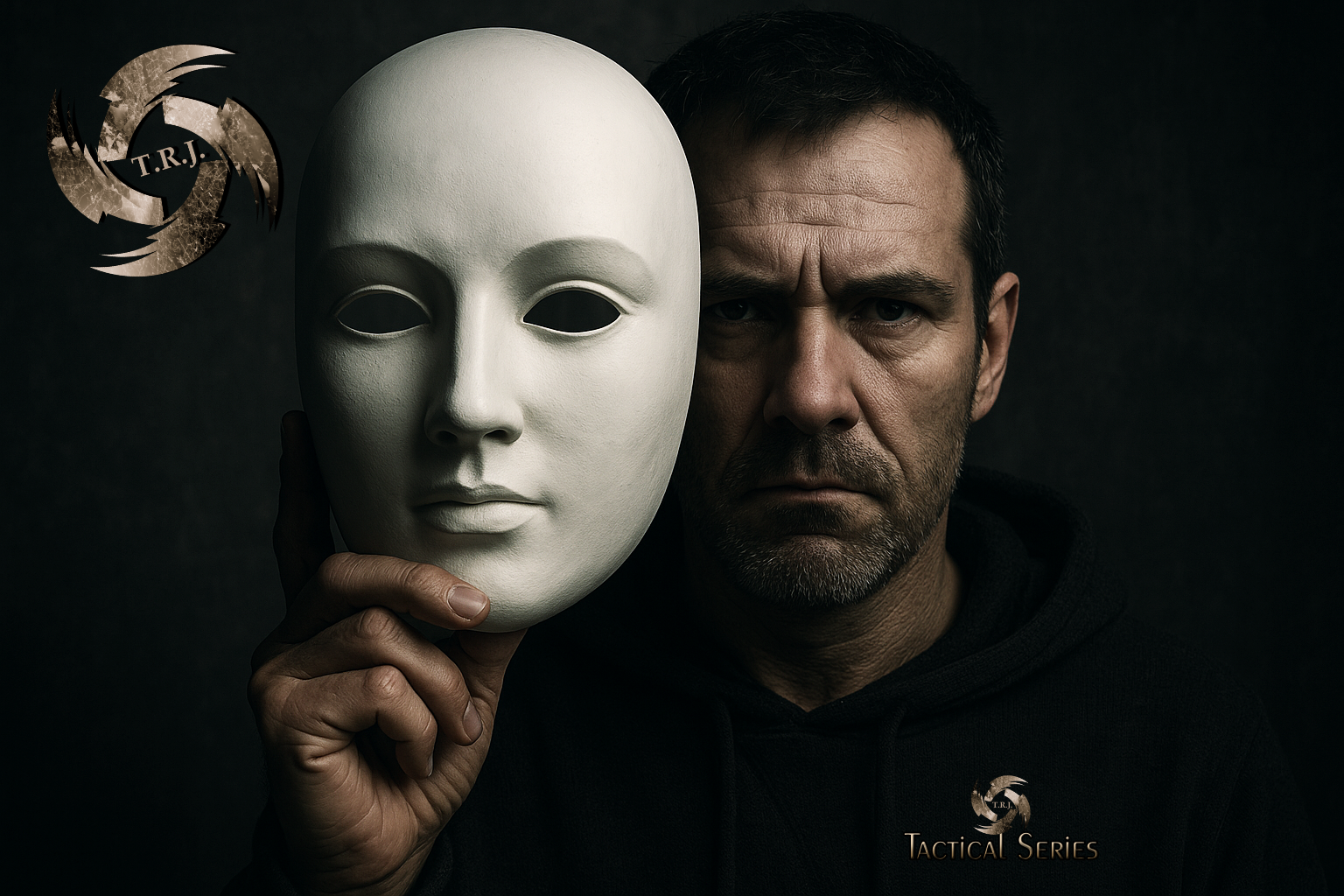
Public behavior is, more often than not, a curated presentation — a social mask crafted through years of conditioning. We are taught to say the right things, smile at the right moments, and present ourselves as “good people” in the eyes of others. That’s the persona. The mask. It’s sustained through impression management, the conscious and unconscious shaping of how others see us. In public, that means displaying patience even when irritated, offering generosity even when unwilling, and appearing composed even when seething inside. But once the performance is no longer necessary, the unfiltered self surfaces. For some, that unfiltered self is simply more relaxed, more casual. For others, it reveals a darker, more selfish, or more abusive core.
I’m not saying everyone operates like this. There are people whose public and private selves are one and the same — people who are genuinely good without needing an audience to reinforce it. But these people, in an unfair twist of human dynamics, are often the ones targeted. Their kindness becomes a commodity. Their empathy becomes leverage. They are asked for more because they give without calculation, and they are punished when they begin to protect themselves. The moment they stop allowing themselves to be used, they are labeled “cold,” “selfish,” or “changed,” when in reality they’ve simply stopped being a source of free labor, emotional energy, or endless patience.
I know this because I am one of those people. I’ve stepped back, pulled the plug on being taken advantage of, and I will never put myself in those shoes again. My willingness to help hasn’t vanished — but it’s now on my terms, at my own pace, and in my own way. The difference is simple: I give because I choose to, not because someone has cornered me into it. And make no mistake — being cornered into it is one of the most exhausting and degrading positions a person can be in. That very dynamic — where one side takes without conscience and the other side gives under pressure — is part of a much bigger psychological pattern.
That pattern is sustained by moral compartmentalization — the belief that one’s treatment of strangers and one’s treatment of loved ones occupy separate moral territories. Someone might treat colleagues, neighbors, or acquaintances with perfect courtesy while justifying cruelty toward family or close friends under the guise of stress, personal grievances, or “teaching them a lesson.” It is reinforced by cognitive dissonance, the mental maneuvering required to maintain the self-image of being a “good person” while engaging in behavior that contradicts it. And because most people want to see themselves as good, they develop rationalizations that excuse the harm they cause behind closed doors.
There is also the shield of the halo effect — the tendency for a person’s success or competence in one area to grant them the presumption of virtue in all areas. A respected business owner, a church leader, a talented entertainer, or a community volunteer can use that halo to camouflage their private behavior. Outsiders rarely suspect them because they’ve been primed to see only the shining surface. This is why it’s possible for deeply unfair or even abusive dynamics to go on for years without intervention — the public image deflects suspicion before it ever forms.
Those who target the genuinely good often operate through a predictable cycle. They begin with small requests, testing the boundaries. A “yes” here becomes precedent, and soon, compliance is expected rather than requested. They alternate warmth and coldness, creating an emotional rhythm that can trap their target in a kind of psychological dependency — what behavioral science calls intermittent reinforcement. They use guilt to frame resistance as selfishness, eroding the target’s confidence in their right to say no. They rely on moral licensing, convincing themselves that their past acts of generosity or kindness give them the right to exploit now. And perhaps most insidiously, they lean on the knowledge that their target is unlikely to expose them, either out of loyalty, fear, or the belief that nobody would believe them anyway.
There is, of course, the opposite type of person — the one with a reverse mask. These are people who may appear gruff, blunt, or even unlikable in public settings, but whose private actions reveal deep loyalty, quiet generosity, and a consistent moral compass. Many people judge the book by its cover, never realizing what’s inside. They don’t play the optics game, and they don’t perform kindness for applause. Their circle is smaller, their trust is harder to earn, but once you have it, they will defend and support you with a commitment that never changes based on who is watching. Yet in a culture addicted to public performance, these people are often dismissed or misunderstood simply because they don’t seek validation from the crowd. I know this type well because this is me — and it still is. Rough on the outside, but with a good heart that doesn’t change whether anyone notices or not.
The unfairness of all this is brutal. Power in these dynamics flows toward those willing to manipulate perception. People with less social capital — the young, the financially dependent, the emotionally invested — bear the brunt of private cruelty while the perpetrator maintains their pristine public image. The consequences are asymmetrical: the target pays in time, mental health, and self-worth, while the exploiter gains comfort, control, and often admiration from the outside world. And because the damage is invisible to anyone not inside the circle, the target is frequently disbelieved, dismissed, or even blamed for their own mistreatment.
Seeing through the mask requires deliberate attention. It means watching how someone treats those who can do nothing for them, noting whether kindness persists when it’s inconvenient, and comparing their words about someone in private with their words in that person’s presence. It means testing boundaries — politely refusing something once — and observing whether that “no” is respected or punished. It means paying attention to those liminal moments between public and private space, where the mask often slips just enough to show what lies beneath.
For those who are genuinely good, survival in this landscape demands a willingness to recognize patterns without needing them to be extreme to be real. It requires defining and enforcing boundaries without apology, refusing to chase the “nice phase” that follows manipulation, documenting behaviors to protect against being gaslit by your own empathy, and understanding that sometimes the healthiest choice is not to change the rules but to limit access entirely.
The danger in confusing public niceness with real goodness is that it blinds us to the reality of who someone is. We are too easily persuaded by curated smiles and rehearsed charm, mistaking them for character. But character is revealed in the unlit spaces, when there is no advantage to gain and no consequence to fear. In those moments, you learn whether patience is a habit or a performance, whether respect is a reflex or a tactic, whether kindness is currency or the true architecture of their nature.
The truth is uncomfortable: some people protect their image for the world while abusing those at home. Others appear hard to the world but protect everyone under their roof with unshakable consistency. Over time, the difference becomes impossible to hide. If you watch long enough — past the dinners, past the smiles, past the photo-worthy moments — you’ll see exactly who’s real, who’s hiding, and who’s been wearing the same face all along.
🔥 NOW AVAILABLE! 🔥
📖 INK & FIRE: BOOK 1 📖
A bold and unapologetic collection of poetry that ignites the soul. Ink & Fire dives deep into raw emotions, truth, and the human experience—unfiltered and untamed.
🔥 Kindle Edition 👉 https://a.co/d/9EoGKzh
🔥 Paperback 👉 https://a.co/d/9EoGKzh
🔥 Hardcover Edition 👉 https://a.co/d/0ITmDIB
🔥 NOW AVAILABLE! 🔥
📖 INK & FIRE: BOOK 2 📖
A bold and unapologetic collection of poetry that ignites the soul. Ink & Fire dives deep into raw emotions, truth, and the human experience—unfiltered and untamed just like the first one.
🔥 Kindle Edition 👉 https://a.co/d/1xlx7J2
🔥 Paperback 👉 https://a.co/d/a7vFHN6
🔥 Hardcover Edition 👉 https://a.co/d/efhu1ON
Get your copy today and experience poetry like never before. #InkAndFire #PoetryUnleashed #FuelTheFire
🚨 NOW AVAILABLE! 🚨
📖 THE INEVITABLE: THE DAWN OF A NEW ERA 📖
A powerful, eye-opening read that challenges the status quo and explores the future unfolding before us. Dive into a journey of truth, change, and the forces shaping our world.
🔥 Kindle Edition 👉 https://a.co/d/0FzX6MH
🔥 Paperback 👉 https://a.co/d/2IsxLof
🔥 Hardcover Edition 👉 https://a.co/d/bz01raP
Get your copy today and be part of the new era. #TheInevitable #TruthUnveiled #NewEra
🚀 NOW AVAILABLE! 🚀
📖 THE FORGOTTEN OUTPOST 📖
The Cold War Moon Base They Swore Never Existed
What if the moon landing was just the cover story?
Dive into the boldest investigation The Realist Juggernaut has ever published—featuring declassified files, ghost missions, whistleblower testimony, and black-budget secrets buried in lunar dust.
🔥 Kindle Edition 👉 https://a.co/d/2Mu03Iu
🛸 Paperback Coming Soon
Discover the base they never wanted you to find. TheForgottenOutpost #RealistJuggernaut #MoonBaseTruth #ColdWarSecrets #Declassified
Support truth, health, and preparedness by shopping the Alex Jones Store through our link. Every purchase helps sustain independent voices and earns us a 10% share to fuel our mission. Shop now and make a difference!
https://thealexjonesstore.com?sca_ref=7730615.EU54Mw6oyLATer7a

Sponsored • TRJ Ads
Inquiries: contact@therealistjuggernaut.com



Quiet truths, powerfully said, it’s a rare kind of clarity to see through the mask and still choose integrity.
Thank you very much, Daisy — that means a lot. Clarity like that comes from walking through the situations that test you most. Once you’ve seen the mask for what it is, the real strength is in keeping your own integrity intact, even when it would be easier to match the deception. Thanks again — always greatly appreciated. I hope you have a great day. 😎
Beautifully said, strength with integrity is rare and powerful. Wishing you a truly great day as well.
Unfortunately, this is all too true! I know fair few people who operate without a mask, with integrity! Those few are the ones I hold close and dear! I just feel so sad when someone I put on a pedestal, slips. And it’s happened to me enough times that I just can’t keep giving them my time. I forgive them 70×7, as the Bible says. But I don’t respect them or give them my time anymore.
Sheila, you said it perfectly — there are a rare few who live without the mask, and those are the ones worth holding close. The hard part is what you described — when someone you trusted, even admired, slips in a way that reveals their true nature. That kind of disappointment cuts deep because it’s not just about the act, it’s about the fracture in what you believed about them.
Forgiveness, as you mentioned, is something we’re called to give — but forgiveness doesn’t mean open access. You can release the resentment without reopening the door. Respect is earned, and once it’s lost, time is far too precious to hand back to someone who’s shown they can’t be trusted with it.
The older I get the less patience I have. Yes, you restated my sentiments exactly, John.
Exactly, Sheila — age has a way of sharpening our sense of what’s worth our time. Thank you very much, Sheila — always greatly appreciated. I hope you have a great night. 😎