
How We Punish the Good, Reward the Wolves, and Why Some of Us Wear Steel Just to Walk Through a Door
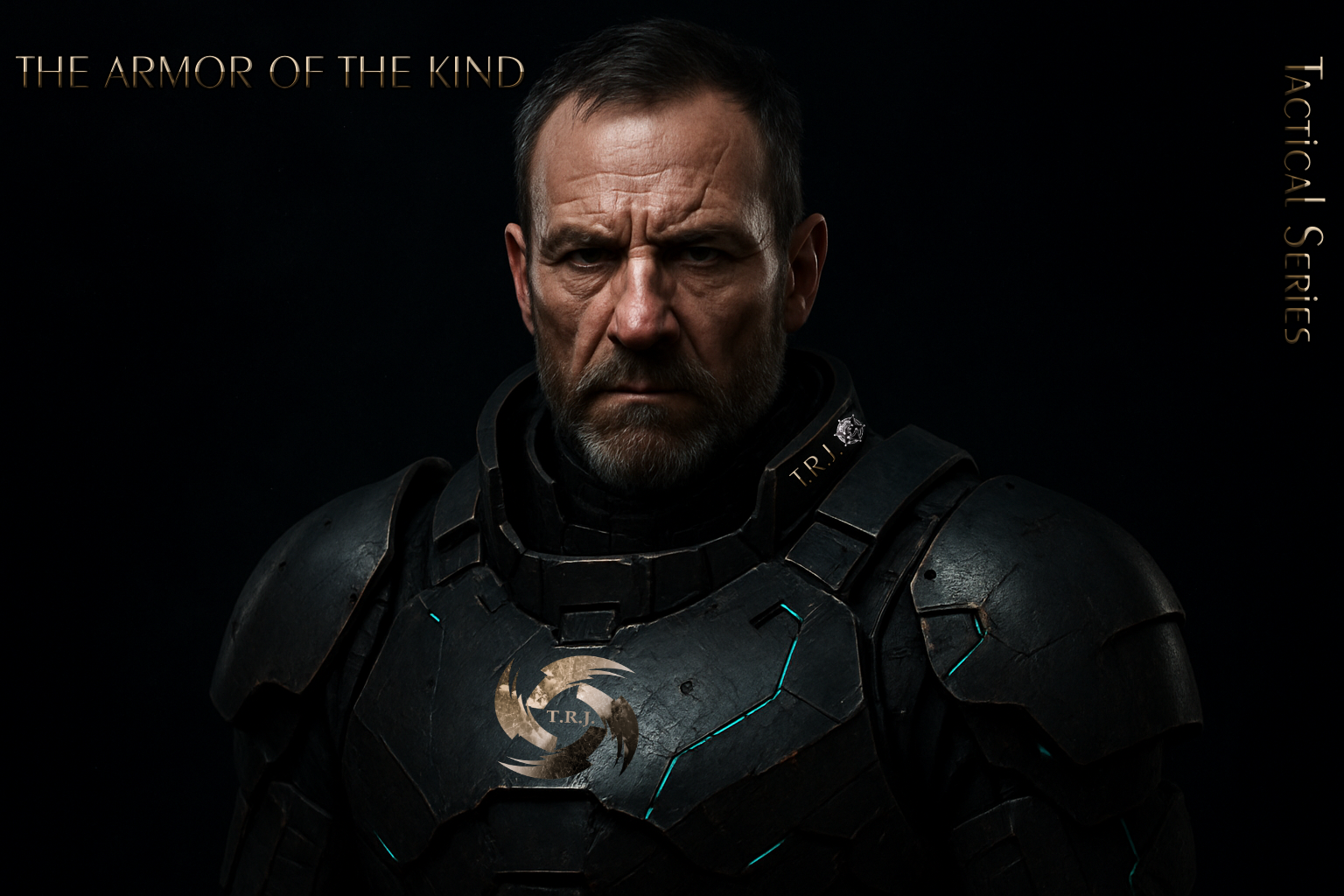
It starts before any word is spoken. A room measures you in a blink — jawline, posture, clothes, age, the residue of old battles carried in the set of your shoulders. If you’ve been bullied, betrayed, misread, or turned into a caricature for sport, your body learns the lesson first: build the armor, move like a fortress, let nothing spill. That armor is not vanity. It is an archive of scars, a ledger of debts never paid back, a survival suit tailored by years of being treated like a villain by people who never asked your name. And under it, somehow, is the person no one expects — the one who still holds doors, still tells the truth even when it costs, still watches over the few who would lay everything down for you without being asked.
People say they want the truth. What they usually want is praise dressed up as honesty. Realists are invited to the table for their accuracy and then punished for it the moment reality rubs a tender spot. You can be kind and still cut through illusion; you can love people and refuse to lie to them. But in a culture that confuses comfort with care, truth begins to feel like an attack. So the kind learn to carry both: open hands and plated wrists. They give without performing it, and they defend without advertising it — because the same crowd that cheers the “straight talker” on Monday will call you cruel on Tuesday when your realism finally lands too close to home.
We talk a lot about “judging a book by its cover,” but the economy of first impressions is more ruthless than a cliché. Looks, profession, posture — these are turned into crude proxies for threat or worth. The nurse who looks like a bouncer gets treated like a suspect. The quiet mechanic who can fix anything is dismissed by a manager who can fix nothing. The woman whose face looks “serious” is labeled cold before she speaks. The gentleman who dresses plain to keep attention away becomes “invisible” to the very people he has helped. We don’t see people; we scan them for a role that makes our world tidy. And the cost of that laziness is paid most by the good — the ones who won’t sell a softer lie just to be liked.
If you live long enough in that climate, your circle doesn’t just shrink; it refines. The loud crowd thins out and the guardians remain — the older friends who would drive through the night without asking why, the younger ones who have seen worse than you think and carry a watchdog’s loyalty for the first person who ever told them the truth straight. That circle is not built out of fear; it’s built out of mutual recognition. They’re not protecting a persona; they’re protecting a mind and a heart that tell them things they can’t afford to lose. They know that what’s inside your skull is not trivia — it’s architecture: patterns, instincts, a file cabinet of hard-won maps. They guard you because the world is running short on real maps.
There’s another truth the armored learn: God has a way of sorting the room without a word. Call it providence, call it filtration — it works. People make up their minds about you at a glance, and instead of begging them to stay, something larger quietly ushers them to the exit. You don’t have to curse or perform vengeance; indifference and distance do the job. The good drift closer; the opportunists can’t stand the gravity of plain truth and peel off. It’s not magic. It’s moral centrifuge. It hurts while it’s spinning, but the separation is a gift.
Why does it feel like kindness loses in public but wins in private? Because the public scoreboard is rigged for spectacle. Greed makes the rules; platforms amplify whatever is easiest to sell; velocity beats substance. “Be outrageous, be frictionless, be a brand.” And yet, in the places where life is actually lived — hospital rooms, night shifts, funerals, late-night crisis calls — the quiet practitioners of decency are the ones holding the ground. The disconnect is brutal: society rewards the wolf while relying on the shepherd it ignores. In that contradiction, good people learn to stop auditioning. Recognition from the wrong court is a curse, not a crown.
Technology promised to unburden us. Mostly, it multiplied our mirrors. We measure ourselves against the loudest liars and call it news; we mistake virality for proof. Systems designed to maximize engagement turn cruelty into a sport and confusion into a currency. If you’re built to tell the truth, that machine will try to starve you out — not always by deleting you, but by drowning you. The easiest way to silence a realist is not censorship; it’s noise. It’s a thousand versions of almost- true, posted faster than you can correct one. And above it, a ceiling of interests too rich to care if you’re right — only if you’re profitable.
The old bullies did it with fists and corners of playgrounds. The new ones do it with policy, with non-answers, with algorithms that erase you without leaving a bruise. The result is the same: good people begin to wonder if goodness still pays. Here’s the part we don’t like to admit: for a while, it doesn’t. In the short game, cheaters win. In the quarter, deception looks like strategy. The “loop” — the closed circuit of favors, fear, and fraud — accumulates interest on its own corruption. But the loop has a flaw: it can’t create. It can only extract. Every empire that feeds on extraction runs out of host. That’s the long game the armored are playing, whether they know it or not.
Realism is not cynicism. Realism is love with a straight spine. It refuses to let you sell your future for applause. It calls greed by its name and still leaves the door unlocked for anyone willing to change. That’s why it offends — not because it hates people, but because it won’t flatter their addictions. A realist who is also kind becomes a rare creature: patient but not permissive, forgiving but not gullible, generous without becoming a vending machine for other people’s appetites. And yes, people walk away from that. Let them. Boundaries are not walls; they are doors with hinges and locks, opened by character.
So what does the code of the armored kind look like?
- Keep the armor; sharpen the kindness. You don’t have to choose. The world needs your steadiness and your mercy, not one amputated to appease the other.
- Cultivate a circle, not a crowd. Crowds eat; circles build. If ten people would bleed for you, you are wealthier than the man with a million spectators who would do nothing.
- Tell the truth on purpose, not for sport. Accuracy without empathy is a hammer in a hospital. Empathy without accuracy is anesthesia on a battlefield. You’ll need both.
- Refuse the shame economy. You are allowed to be disliked by the right people. Wear that like rank.
- Make something every day that extraction cannot counterfeit — a craft, a habit, a standard, a promise kept when no one is watching. The loop cannot metabolize that.
- Pray. Or if you don’t, at least be still. Let something larger than the feed sort your day. The filter works; trust it.
- Teach the young guardians who gathered around you. Show them how to carry strength without turning cruel, how to protect without becoming what they’re fighting.
- Do not beg for recognition. The good rarely get it on time. Build anyway. Archive anyway. Sing anyway. Your work is the receipt.
You asked where this ends. It does not end with the wolves winning. It ends with two ledgers: the one the crowd keeps and the one the years keep. In the crowd’s ledger, cruelty spikes, cheats prosper, and the honest are treated like furniture. In the years’ ledger, character compounds. The bullies age into cautionary tales. The cheaters get trapped in the maze they built. The kind — the ones who wore armor without surrendering the heart beneath it — become ports in a storm other people finally admit is real. They are not famous; they are foundational. Their names are spoken in rooms that matter: kitchens, barns, labs, back offices where real life requires a person you can trust.
There will be days when the silence feels like erasure. It isn’t. It’s the sound of the centrifuge doing its work. Let it. Stand still enough to let what isn’t meant for you spin off. Keep the armor buckled and the hand open. Keep the circle tight and the table set. Keep the truth at full strength and your temper on a leash. When the noise is finished burning through its fuel, what remains are people and places anchored by those the world learned to overlook. The good do not disappear. They become the frame.
The Systemic Punishment of Decency
If you want to understand human nature, you don’t have to start in boardrooms or battlefields. Start in a schoolyard. Watch what happens when one child decides not to play dirty, not to hit back, not to mock the easy target. Nine times out of ten, that child will be marked as weak — not because they are weak, but because they refuse to give the crowd its entertainment. The crowd rewards the bully with laughter, with status, with a strange immunity earned through fear. The kind child stands alone, maybe with one quiet friend. That dynamic does not vanish with age. It simply grows more expensive. At thirty, the bully wears a tie or hides behind a title, still bullying in a different way. At fifty, the bully runs a crooked corporation, writes policy, or games a system that looks legitimate but is nothing more than a grown-up playground.
And so the cycle continues: decency is disregarded because it does not scream; kindness is punished because it does not perform cruelty to prove its power. The armor that the good carry into adulthood is not psychopathology — it is proof. Proof that they learned early that most people will not recognize goodness unless it bleeds for them. Proof that the only way to survive in a culture that confuses kindness with gullibility is to walk through the world plated in restraint, watchfulness, and silence.
But this punishment of decency is not just social; it is systemic. Look closely: governments subsidize greed while penalizing honesty; industries promote “disruption” when it means exploitation but crush the innovators who try to build fairness into their models. Whistleblowers are jailed while fraudsters cash their bonuses. The world does not just ignore the good — it actively taxes them, fines them, silences them, jails them, and filters them out of leadership. Why? Because a person who will not play the game cannot be bought, and that terrifies those who have built empires on nothing but counterfeit.
Yet here lies the paradox: while the world ridicules the kind, it still depends on them to keep civilization from imploding. It is the honest clerk who saves a family from financial ruin by refusing to process a fraudulent document. It is the nurse who speaks truth to a doctor’s arrogance that prevents a fatal mistake. It is the mechanic who fixes more than he charges for, the teacher who refuses to pass a failing student, the neighbor who still checks on your house when you’re away. That’s what makes a realist, that’s what makes a juggernaut — the recognition of the invisible scaffolding held up by those who will never trend, never profit, but never quit. These people rarely get headlines. They get exhaustion. They get overlooked. But without them, the system that mocks them would collapse in a week.
A realist juggernaut is not defined by title or spotlight. They are the ones who see clearly, speak plainly, and keep going even when the crowd turns away. They carry armor not because they hate the world, but because the world taught them early that kindness without defense is prey. They move through life with a balance most can’t hold — eyes open to cruelty, hands still open to those worth saving. They are blunt enough to offend the fragile, strong enough to withstand the backlash, and loyal enough to guard what others would discard. They are the ones who hold the line in silence, who create continuity in a collapsing age, who refuse to let greed have the last word.
A juggernaut is not unstoppable because they are loud; they are unstoppable because they endure. They survive the ridicule, the betrayal, the loneliness, and the dismissal, and somehow remain unbroken. They know the cost of realism — being misread, being called cruel, being left behind — and they pay it anyway, because anything less would be a lie. They will not sell themselves for ease, will not flatter corruption for safety, will not abandon truth for applause. In a world addicted to noise, they are the anchor that holds when everything else drifts.
Generationally, the decline is sharp. What used to be respect as default has now become skepticism as default. Where once a handshake sealed a deal, now ten pages of legal disclaimers are required. Where once parents taught their children to respect elders, now children are raised on influencers who profit from ridicule. We have created a culture where cruelty trends faster than kindness and attention has become the new currency of survival. And yet — even in that environment — the armored kind continue. Not because they enjoy the punishment, but because they cannot betray themselves. They remain realists, even when realism costs. They remain kind, even when kindness is dismissed. They remain loyal, even when loyalty earns no applause.
And here is the secret: while the world promotes wolves, the wolves age quickly. Their cruelty turns inward. Their children grow up fearing them. Their empires fall apart from within. The good may not be recognized in time, but they outlast. They become the frame of continuity when the spectacle burns itself down. That is the long arc of justice that history keeps quietly, even when society refuses to.
TRJ Verdict
We punish the good because spectacle is cheap and discernment is expensive. We mistake armor for arrogance, realism for cruelty, and quiet for absence — and in doing so, we empower a loop that rewards extraction over creation. The honest get taxed, fined, silenced, or ignored, while the crooked are promoted as innovators, leaders, and “winners.” We live in a culture that mistakes noise for proof, cruelty for strength, and fraud for success. And yet — when the noise fades, it is the quiet ones we depend on to rebuild what was lost.
The realist juggernaut endures not because they are celebrated, but because they cannot be broken. They know recognition is shallow currency, easily stolen and quickly spent. Continuity, however, cannot be faked. A juggernaut carries the burden of being misread, overlooked, or vilified, but they keep building anyway — brick by brick, truth by truth.
Their strength is not in their volume but in their permanence. When the wolves have burned through their own lies and the spectacle collapses under its own weight, the juggernauts will remain — some may be scarred, yes, but standing, still holding the ground others abandoned.
The wolves will always have better ratings. They will win the quarter, trend the week, and dominate the stage. But the shepherds — the ones who guard the flock even while being mocked by it — will have a future. Their legacies are written not in headlines but in lives stabilized, truths preserved, and integrity remembered. The world may never cheer them, but history will need them.
And that is the reckoning. We don’t post. We foreshadow it. The juggernauts are already here, carrying proof in their armor, refusing the counterfeit, and waiting for the loop to collapse under its own weight. When it does, the world will finally see who was real all along — Tethered Reality.
🔥 NOW AVAILABLE! 🔥
📖 INK & FIRE: BOOK 1 📖
A bold and unapologetic collection of poetry that ignites the soul. Ink & Fire dives deep into raw emotions, truth, and the human experience—unfiltered and untamed.
🔥 Kindle Edition 👉 https://a.co/d/9EoGKzh
🔥 Paperback 👉 https://a.co/d/9EoGKzh
🔥 Hardcover Edition 👉 https://a.co/d/0ITmDIB
🔥 NOW AVAILABLE! 🔥
📖 INK & FIRE: BOOK 2 📖
A bold and unapologetic collection of poetry that ignites the soul. Ink & Fire dives deep into raw emotions, truth, and the human experience—unfiltered and untamed just like the first one.
🔥 Kindle Edition 👉 https://a.co/d/1xlx7J2
🔥 Paperback 👉 https://a.co/d/a7vFHN6
🔥 Hardcover Edition 👉 https://a.co/d/efhu1ON
Get your copy today and experience poetry like never before. #InkAndFire #PoetryUnleashed #FuelTheFire
🚨 NOW AVAILABLE! 🚨
📖 THE INEVITABLE: THE DAWN OF A NEW ERA 📖
A powerful, eye-opening read that challenges the status quo and explores the future unfolding before us. Dive into a journey of truth, change, and the forces shaping our world.
🔥 Kindle Edition 👉 https://a.co/d/0FzX6MH
🔥 Paperback 👉 https://a.co/d/2IsxLof
🔥 Hardcover Edition 👉 https://a.co/d/bz01raP
Get your copy today and be part of the new era. #TheInevitable #TruthUnveiled #NewEra
🚀 NOW AVAILABLE! 🚀
📖 THE FORGOTTEN OUTPOST 📖
The Cold War Moon Base They Swore Never Existed
What if the moon landing was just the cover story?
Dive into the boldest investigation The Realist Juggernaut has ever published—featuring declassified files, ghost missions, whistleblower testimony, and black-budget secrets buried in lunar dust.
🔥 Kindle Edition 👉 https://a.co/d/2Mu03Iu
🛸 Paperback Coming Soon
Discover the base they never wanted you to find. TheForgottenOutpost #RealistJuggernaut #MoonBaseTruth #ColdWarSecrets #Declassified
Support truth, health, and preparedness by shopping the Alex Jones Store through our link. Every purchase helps sustain independent voices and earns us a 10% share to fuel our mission. Shop now and make a difference!
https://thealexjonesstore.com?sca_ref=7730615.EU54Mw6oyLATer7a

Sponsored • TRJ Ads
Inquiries: contact@therealistjuggernaut.com





So thoroughly true!
Thank you very much, Sheila. The truths in it are hard-earned, but they stand — and I appreciate you seeing that. Always greatly appreciated. I hope you have a wonderful day. 😎