
A New Medical Frontier Emerges as Australia Uses Ice, Gas, and Real-Time MRI to Destroy Tumors Without Cutting Open the Body
There are breakthroughs that announce themselves with noise, press conferences, and marketing campaigns, and then there are the ones that move quietly through a hospital corridor and change medicine forever. What happened in Sydney belongs to the second category — a shift so precise, so elegantly engineered, that most people won’t realize what it means until the ripple has already reached their own hospitals, their own families, their own bodies. This is the moment a machine-guided needle, cooled by a gas colder than the darkest corners of Antarctica, becomes a weapon against tumors that once required scalpels, incisions, and the violent choreography of major surgery. Australia is now using MRI-guided cryoablation, and whether the world is ready or not, this is the beginning of a new medical frontier.
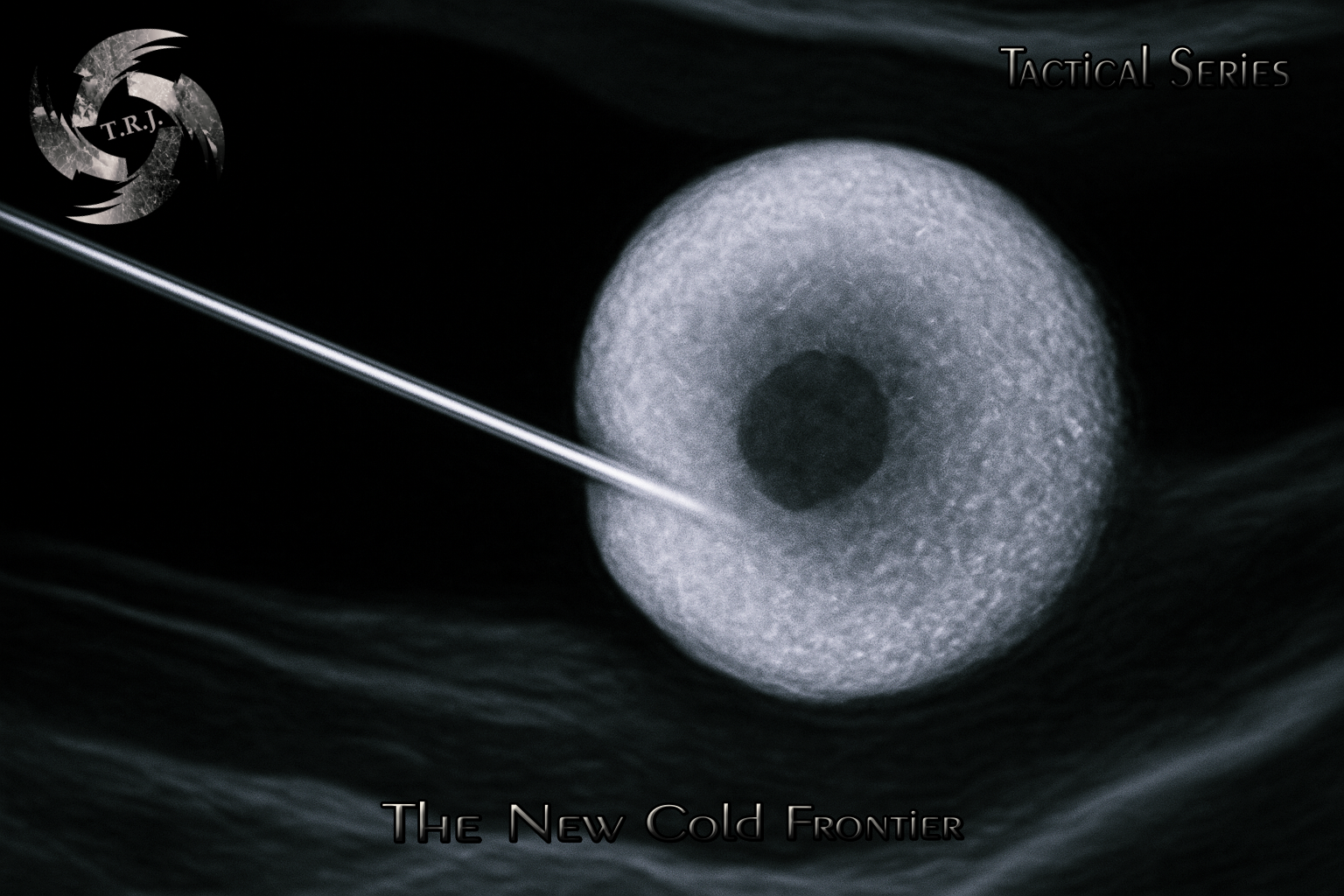
Inside Liverpool Hospital in New South Wales, doctors have begun freezing tumors from the inside out — literally turning lethal growths into ice. A hollow needle enters the body through a puncture so small it barely qualifies as surgery. Argon-based gas rushes through the chamber and drops the temperature at the tip of the probe to levels that would shatter steel. The tumor is encased in an expanding sphere of ice — an “iceball,” as clinicians call it — and every millimeter of its growth is monitored live through MRI screens. Not CT. Not ultrasound. MRI. The only imaging method that can reveal temperature changes, cellular shifts, and the edges of the ice as it eats the tumor’s boundaries. It’s one thing to kill a tumor. It is another to watch it die in real time.
For decades, surgeons were forced into a corner when tumors appeared in the spine, pelvis, or deep recesses where bone, nerves, and vital structures created a near-impossible operating field. Traditional surgery in those areas wasn’t just complex — it was dangerous, bloody, and often debilitating. Patients emerged with trauma the body never fully stopped remembering. Cryoablation flips the equation entirely. Instead of opening the body, physicians navigate it. Instead of cutting, they target. Instead of removing, they destroy internally. The body is no longer a battlefield. It becomes a map.
Older patients, patients with heart disease, patients with compromised lungs, patients whose bodies cannot withstand anesthesia or surgical blood loss — these were the people medicine often had to turn away, the people told that intervention came with too much risk. Cryoablation rewrites their fate. A needle. A freeze cycle. Controlled thaw. Another freeze cycle. And suddenly, a tumor that once demanded a full surgical team becomes something handled in a room full of magnet coils and monitored breaths. Many patients walk out of the hospital the same day. No long recovery. No weeks trapped inside a medical timeline they didn’t choose.
This is not cosmetic innovation or a boutique technology designed to impress donors. This is a structural shift in oncology. Because the deeper truth is that the medical world has always been divided between the patients who qualify for major surgery and the patients who do not. Cryoablation collapses that divide. It takes the people who were once categorized as “inoperable” and gives them a second medical life — a chance at treatment without trauma, precision without risk, hope without the long shadow of surgery.
And the MRI guidance is not a luxury. It’s the entire point. CT can show a needle. Ultrasound can show density. But MRI can show life. It can show tissue temperature, vascular patterns, the exact edge where ice meets heat, where living cells transition into frozen architecture that can no longer sustain itself. MRI makes cryoablation not just possible but safe in places where the margin for error is measured in millimeters. A tumor near the spinal cord? Watch the iceball, stop one millimeter short. A tumor brushing a major artery? Freeze the mass while protecting the vessel. This is medicine with the precision of a sniper and the gentleness of a hand that refuses to harm what does not need to be harmed.
What Australia has shown the world is that you can rewrite the entire risk structure of cancer care by changing the point of entry — from a scalpel to a needle, from an incision to a freeze cycle, from trauma to precision. And the real shock is how many other nations don’t yet have this technology. Cryoablation isn’t brand new. What’s new is the MRI-guided component, the real-time monitoring, the ability to push cryotherapy into anatomical regions that were once untouchable. The ability to destroy a tumor sitting deep in the pelvis without destabilizing the spine. The ability to treat metastatic pain without the collateral damage of open surgery. The ability to give a frail patient a treatment option that doesn’t feel like a punishment.
Hospitals around the world are still chained to legacy systems — long surgical waiting lists, overburdened operating rooms, outdated imaging workflows, and infrastructure that moves more slowly than medical knowledge. Cryoablation does not wait for that system to catch up. It solves problems that the system created. It reduces hospital loads. It lowers complication rates. It shortens recovery times. It turns major surgeries into minimally invasive procedures with a fraction of the cost and a fraction of the trauma. And it gives patients something systems rarely give them anymore: time.
Whether hospitals worldwide will invest in this technology is not simply a financial question. It’s a moral one. Do you build a surgical wing that will remain overbooked for decades, or do you build a cryoablation suite that frees surgeons, frees patients, frees resources? Do you cling to the rituals of major surgery, or do you accept that the future of oncology is not in how widely you can open the body, but how precisely you can navigate it? The world is not waiting for another generation of operating rooms. It is waiting for a generation of treatments that don’t demand the body be broken before it can be healed.
Australia has taken the step first. They didn’t announce a revolution. They performed one. A single needle, guided by the eyes of a machine that does not blink, freezing a tumor that once required scalpels and stitches. A cold frontier opened, and medicine walked through.
And the truth is simple: the rest of the world should follow.
TRJ VERDICT — THE FUTURE OF MEDICINE WILL BE BUILT BY PRECISION, NOT TRADITION
The medical world rarely admits that many of the structures it protects are held in place not by necessity but by momentum. Operating rooms, surgical wings, and trauma theatres have become symbols of capability, yet those same structures often define the limits of who can receive care and who cannot. Technologies like MRI-guided cryoablation expose a truth that medicine has quietly avoided: healing does not need to come at the cost of human endurance. Trauma does not need to be the price of survival. The body does not need to be broken before it is saved.
What Australia has introduced is not just a tool but a shift in philosophy. It dismantles the long-standing belief that major illness requires major cutting. It challenges the idea that the only path to treatment is through the gateway of invasive surgery. It exposes an uncomfortable divide between what is medically possible and what systems allow. And it forces every nation to confront a question they cannot avoid: are you advancing medicine, or are you defending old architecture?
Cryoablation proves that the future belongs to technologies that honor the patient’s body instead of conquering it. It proves that precision will always outperform tradition once the tools exist to make precision real. It proves that a few millimeters of control inside an MRI suite can save someone from months of pain, trauma, and risk. And it proves that the next great leap in global healthcare will not come from expanding surgical capacity but from reducing the need for surgery altogether.
The deeper truth is that systems resist change because change exposes inefficiency. Cryoablation threatens the profitability of long recoveries. It challenges the dominance of operating rooms. It cuts into the backlog of surgeries that hospitals rely on for revenue. It rewrites surgical hierarchies that have existed for decades. But every meaningful advancement has always done the same. Innovation does not ask permission from tradition. It simply proves it can do better.
And that is what happened in Sydney. A machine-guided needle entered the body with almost no trauma, froze a tumor with a level of control the human hand could never replicate, and allowed a patient to stand up, breathe normally, and walk out of the hospital with their life unchanged except for the absence of the growth that once threatened it. No incision. No blood loss. No weeks of recovery. No scars. Just medicine operating at the level it should have been operating all along.
The world can pretend this is a small development. It isn’t. The world can pretend this is a niche technology. It isn’t. The world can pretend this is optional. It isn’t. What happened in Australia is the future making its first move, and every nation that refuses to follow will remain trapped in systems built for a different century.
Cryoablation is more than a treatment. It is a correction. A course adjustment. A signal that medicine can be both powerful and gentle, both aggressive against disease and respectful toward the human body it defends. It removes the violence from healing. It takes the brutality out of intervention. It gives the patient their dignity back.
And that is why this technology will not remain limited to one hospital in New South Wales. It will spread. It will pressure old systems. It will force modernization. It will expose the gap between what is available and what is offered. And eventually, it will redefine what medical treatment is supposed to look like.
Operational_Plan.pdf
South Western Sydney Local Health District — “Surgical and Procedural Services Plan to 2031 (2025 Addendum).”
NSW Government — Official: Sensitive Classification. (Free Download)

SurgProc-2031.pdf
South Western Sydney Local Health District — “Innovation: Changing Lives — Spring 2022 Publication.”
Includes system updates, imaging advancements, and clinical service expansions. (Free Download)
Thrive_2202.pdf
South Western Sydney Local Health District — “Thrive Magazine, Issue #17 — Spring 2022.”
Produced by Strategic Communications & Media Unit. (Free Download)
s13244-021-01014-5.pdf
European Society of Radiology — “ECR 2021 Book of Abstracts.”
Published in Insights into Imaging (Supp. 2), June 2021. (Free Download)
Cryoablation-for-Kidney-Tumours-IRSA.pdf
Hong Kong Journal of Radiology — “MRI-Guided Cryotherapy for Precision Tumour Ablation.”
Chiang JB, Poon WL, Kwok PCH, Fung HS. (Free Download)
v26n3_Magnetic.pdf
(This is the same Hong Kong Journal of Radiology MRI-guided cryotherapy article — alternate formatting, same study.)
Hong Kong College of Radiologists — HKJR 2023;26:168–173. (Free Download)
J Med Imag Rad Onc – 2025 – Abstract.pdf
Journal of Medical Imaging and Radiation Oncology — IRSA ASM 2025 Supplement.
Abstract: “Image-guided thermal ablation of malignant renal tumours: Retrospective review from Sunshine Coast University Hospital.” (Free Download)
TRJ BLACK FILE — The Cold Rewrite of Modern Oncology
These are the documented foundations behind the new MRI-guided cryoablation frontier.
Document #001 — NSW Surgical and Procedural Plan to 2031
Operational framework confirming the expansion of advanced image-guided therapies inside South Western Sydney hospitals, including real-time MRI-supported interventions.
Document #002 — Liverpool Hospital Multi-Modality Interventional Suite
Official plan outlining infrastructure capable of MRI-visible ablation procedures using precision probes inside controlled magnetic environments.
Document #003 — IRSA Cryoablation Standards
Professional guidance detailing cryotherapy as a validated minimally invasive oncology procedure. Freeze cycles, thaw intervals, and tissue response profiles are documented and reproducible.
Document #004 — MRI-Guided Cryotherapy Case Evidence
Peer-reviewed radiology results demonstrating that MRI sequences can display thermal boundaries, ice growth patterns, and probe placement with millimeter accuracy.
Document #005 — Renal Tumor Ablation (Retrospective Review)
Clinical review confirming that thermal ablation eliminates tumor volume through intratumoral crystallization, with reduced complication rates compared to traditional surgery.
Document #006 — High-Risk Patient Suitability Data
Published outcomes showing that elderly patients, cardiac-restricted patients, and those unable to undergo major surgical trauma experienced successful cryoablation with rapid recovery.
Document #007 — Oncology Pain-Relief Applications
Evidence describing cryoablation’s role in destroying metastatic pain sources deep within bone structures without destabilizing the spine or compromising nearby organs.
The quiet revolution is not theoretical. It is documented, operational, and already deployed inside Australia.
And the only incision the future needs… is a needle.

🔥 NOW AVAILABLE! 🔥
🔥 NOW AVAILABLE! 🔥
📖 INK & FIRE: BOOK 1 📖
A bold and unapologetic collection of poetry that ignites the soul. Ink & Fire dives deep into raw emotions, truth, and the human experience—unfiltered and untamed
🔥 Kindle Edition 👉 https://a.co/d/9EoGKzh
🔥 Paperback 👉 https://a.co/d/9EoGKzh
🔥 Hardcover Edition 👉 https://a.co/d/0ITmDIB
🔥 NOW AVAILABLE! 🔥
📖 INK & FIRE: BOOK 2 📖
A bold and unapologetic collection of poetry that ignites the soul. Ink & Fire dives deep into raw emotions, truth, and the human experience—unfiltered and untamed just like the first one.
🔥 Kindle Edition 👉 https://a.co/d/1xlx7J2
🔥 Paperback 👉 https://a.co/d/a7vFHN6
🔥 Hardcover Edition 👉 https://a.co/d/efhu1ON
Get your copy today and experience poetry like never before. #InkAndFire #PoetryUnleashed #FuelTheFire
🚨 NOW AVAILABLE! 🚨
📖 THE INEVITABLE: THE DAWN OF A NEW ERA 📖
A powerful, eye-opening read that challenges the status quo and explores the future unfolding before us. Dive into a journey of truth, change, and the forces shaping our world.
🔥 Kindle Edition 👉 https://a.co/d/0FzX6MH
🔥 Paperback 👉 https://a.co/d/2IsxLof
🔥 Hardcover Edition 👉 https://a.co/d/bz01raP
Get your copy today and be part of the new era. #TheInevitable #TruthUnveiled #NewEra
🚀 NOW AVAILABLE! 🚀
📖 THE FORGOTTEN OUTPOST 📖
The Cold War Moon Base They Swore Never Existed
What if the moon landing was just the cover story?
Dive into the boldest investigation The Realist Juggernaut has ever published—featuring declassified files, ghost missions, whistleblower testimony, and black-budget secrets buried in lunar dust.
🔥 Kindle Edition 👉 https://a.co/d/2Mu03Iu
🛸 Paperback Coming Soon
Discover the base they never wanted you to find. TheForgottenOutpost #RealistJuggernaut #MoonBaseTruth #ColdWarSecrets #Declassified

Sponsored • TRJ Ads
Inquiries: contact@therealistjuggernaut.com



Wow, amazing. Thanks for a great post, John. 😎👏
Thank you very much, Darryl — I really appreciate that. It truly is an amazing breakthrough, and hopefully more like this keep coming. Thanks again, Darryl. I hope you have a peaceful day. 😎
This is an amazing discovery! My fear is that hospitals will adopt it or play the “too expensive” card as an excuse for not doing so.
You’re absolutely right, Michael — that’s the biggest fear. The science is here, the results are real, but hospitals have a history of hiding behind the “too expensive” excuse whenever a breakthrough threatens to disrupt their routine. This technique should be adopted everywhere, not just in the places that can afford it. When something this precise can save tissue, shorten recovery, and reduce complications, cost shouldn’t be the barrier. Thank you again, Michael — always greatly appreciated. I hope you have a peaceful day. 😎
Wow! Great news!!
Thank you very much, Daisy — it really is. This is the kind of breakthrough that can change treatment for a lot of people once it spreads. Thanks again, Daisy — always greatly appreciated. I hope you have a peaceful day. 😎
Wishing you a peaceful day as well. 😎
I definitely want to reblog this and share far and wide, John! This is incredible news!!
Thank you very much, Sheila — I really appreciate that. It’s definitely worth getting out there because it’s the kind of breakthrough most people won’t hear about until it reaches their own hospitals.
Thank you again, Sheila — always greatly appreciated. I hope you have a peaceful night, and God bless you and yours. 🙏😎
This is a fantastic idea. Thank you for sharing this technique, John. I hope this becomes the norm when it comes to cancer surgery. I know we are probably a long way from that but this sounds so promising. Thanks again and I hope you have a great night!
You’re very welcome, Chris — and I agree with you completely. This technique is one of the most promising shifts we’ve seen in modern oncology. Anything that can destroy tumors without cutting the body open, without the long trauma of recovery, and without putting high-risk patients through major surgery is a step in the right direction.
It may take time before this becomes the standard everywhere, but the fact that it’s already being done — and done successfully — shows that the future is moving faster than most people realize. What Australia just demonstrated is the kind of precision medicine we should have had years ago.
Thank you again for reading and for always bringing thoughtful insight to these stories. I hope you have a great night as well. 😎
You’re welcome and thank you for your reply, John. I’m looking forward to this new tech moving quickly into the medical world. Thank you for your kind words!