
Beyond the Laugh: What a Digital Hoax Taught Us About Confusion, Credibility, and the Collapse of Verification
There are moments when the universe humbles us with authentic discovery, and then there are moments when the internet decides to do the job itself. 😮 The rise of the fictional world known as Ammonite belongs to the second category, a stunning reminder that a single image with dramatic lighting can outrun the speed of truth in a world conditioned to accept spectacle as revelation. The image appeared without context, drifting through late-night social feeds where astronomy, fantasy art, and digital mythology have merged into one constant stream. It displayed a world too cinematic for reality, painted with storms that bent physics and landscapes that belonged more to an artist’s subconscious than to any cosmic record. 😢
To anyone accustomed to real astrophotography, it was instantly recognizable as a render, yet to millions who encountered it in a moment of scrolling boredom, it became the most significant planetary discovery since the identification of exoplanets themselves. 👍 ❤️ 😮 The transformation from artwork to “new planet” happened with startling speed, accelerated by the modern hunger for wonder in a world that has drained its attention span but not its longing for the extraordinary. People began studying the pixels as if they had been entrusted with a leaked NASA briefing.
Some claimed the atmospheric colors revealed alien biology. Others declared it proof of secret colonization initiatives. Entire communities built narratives so confidently that questioning the validity of the image felt almost inappropriate. What once would have been dismissed as digital art became a cultural projection screen for everything people desired in a universe that no longer feels mysterious enough. I’m exaggerating a bit, of course, but nonetheless it got a lot of 👍 ❤️ 😮 — you know why? Because they believed it to be real.
The science behind it did not exist because the planet did not exist, yet that did nothing to slow the growth of theories. People began describing geological formations that violated every known process of planetary evolution. 😂 They insisted the lighting revealed multiple suns. They pointed to cloud shapes and insisted they signaled advanced meteorology unlike anything in our solar system. The conclusions came rapid and breathless, not because evidence supported them, but because emotional investment had already convinced believers that evidence was unnecessary.
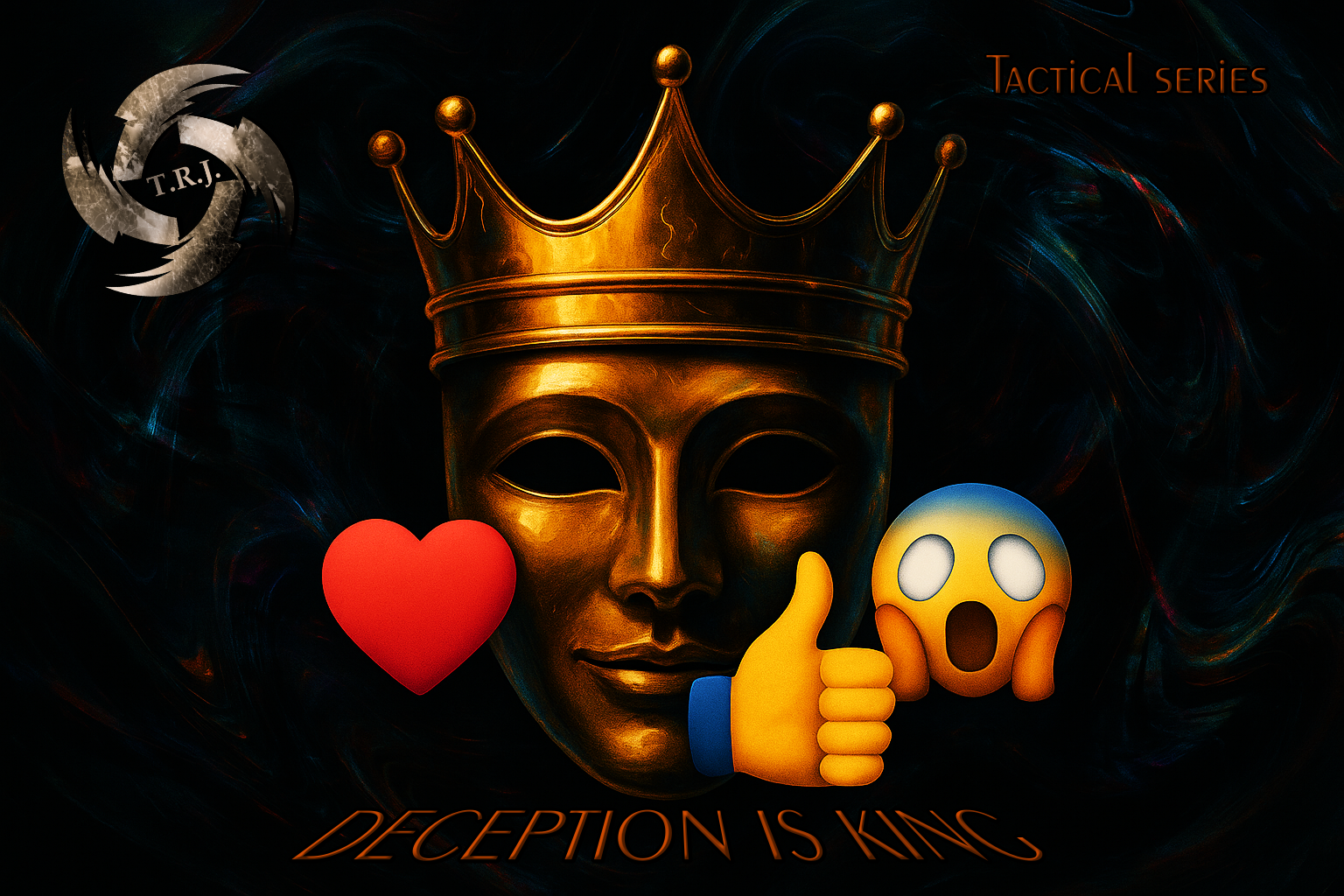
Astronomers found themselves pulled into the spectacle, not to confirm anything but to answer a tidal wave of frantic messages demanding explanations for a discovery that never occurred. 😂 I’m exaggerating a bit, of course, but the situation is nonetheless the truth — some believed it was real. We have seen this happen several times, over and over: people 👍 ❤️ 😮 but never look anything up to see whether these things are real or not. And we wonder why misinformation and disinformation spread so easily — deception is king. Fake material is everywhere, and people believe it without hesitation.
Observatories across the United States, Europe, and India were probably contacted by people asking for coordinates — 😂 yes, probably genuinely asking. NASA’s public inbox probably received questions about how the “planet” should be classified. A few amateur astronomers probably even suggested the agency was concealing the discovery. And if experts clarified that the object was a digital composition, reactions would of ranged from mild disappointment to outright refusal to accept it. That’s the world we live in today — a place where the correction is less believable than the illusion, and where a captivating image can outrun reality in a matter of minutes.
For a moment, a fictional world gained enough traction to make real institutions respond. And strangely, the reaction revealed far more about people than about astronomy. Ammonite touched something emotional — a quiet hunger for wonder that everyday life rarely offers anymore. It gave people a sense of untouched possibility, a world unsullied by conflict, noise, or complexity. The belief didn’t spread because the rendering was flawless; it spread because it felt like an escape disguised as a discovery. But hey, I find myself exaggerating now — well, maybe not… or maybe just a little bit.
The world feels smaller, harsher, and more predictable than ever, and people are starved for anything that reminds them the universe might still hold wonders capable of knocking them off balance. A fantasy planet became a mirror reflecting that need. The irony is that the universe does not require fabrications to inspire awe; real discoveries already unfold at scales beyond comprehension. Yet the internet’s appetite operates on different terms. Authenticity matters less than momentum. The image traveled through social networks with the force of collective longing, and that longing turned fiction into temporary fact. The result became a cultural phenomenon built entirely from digital imagination, yet powerful enough to make its way into conversations about genuine astronomy.
Ammonite never existed, never will exist, and never came from any observatory, but it succeeded in revealing something true about this era: people will always chase wonder, even if they have to invent it themselves. And in a time defined by noise, exhaustion, and diminishing curiosity, the rise of a fictional world reminded us that the human mind still reaches outward, still yearns for distant horizons, still tries to carve meaning out of the void. The universe did not create Ammonite. The internet did. Not because of data, not because of telescopes, not because of scientific verification, but because the desire for awe is stronger than the instinct to verify. In that sense, the story of this nonexistent planet may be more revealing about our species than any real exoplanet discovery in recent memory.
We have researched every kind of truth — from the things your government does behind your back, backed by receipts, to the reality that our own planetary shield is steadily weakening, also backed by receipts. That fading protection is the reason auroras now appear in regions where they were never meant to be seen. We bring you verified truths every single day, and yet the one post that was pure satire — Ammonite — earned more 👍 ❤️ 😮 than it ever should have. But it did, and it happens constantly with other bullshit just like it. People are more confused than ever, and the line between what is real and what is emotionally satisfying grows thinner by the day. This is not about TRJ — there’s a point to be made here.
THE AUDIENCE THAT REACTS BEFORE THEY VERIFIES — AND WHY IT MATTERS
A pattern shows up every time one of these fictional celestial worlds — or any other fabricated claim — makes the rounds: a small handful of people call it out immediately, but a far larger group believes it without hesitation. They react first and verify later — if they ever verify at all. And the strangest part is this: even when someone explains that the “newly discovered planet” is a digital artwork, many refuse to accept the correction. The illusion feels more believable than the truth.
This isn’t because people are unintelligent. It’s because they’re overwhelmed. They scroll through hundreds of posts a day, fed by algorithms that reward emotion over accuracy. A strange-looking planet, a dramatic headline, and the illusion of a cosmic breakthrough hit harder and faster than critical thinking can respond. In that moment, the reaction — 👍 ❤️ 😮 — becomes the validation. The imagination wins, and the correction arrives too late to matter. Humorous things are great — but not when people believe them. I’m not trying to be sour here, but some people genuinely have nothing better to do than make things up.
This is the environment where misinformation thrives. People don’t fall for it because they seek lies, but because the digital world has conditioned them to respond before they question. A fake discovery outruns real science not because it is credible, but because it is comforting, exciting, and effortless. Truth requires work; deception requires a tap of the thumb.


🔥 NOW AVAILABLE! 🔥
🔥 NOW AVAILABLE! 🔥
📖 INK & FIRE: BOOK 1 📖
A bold and unapologetic collection of poetry that ignites the soul. Ink & Fire dives deep into raw emotions, truth, and the human experience—unfiltered and untamed
🔥 Kindle Edition 👉 https://a.co/d/9EoGKzh
🔥 Paperback 👉 https://a.co/d/9EoGKzh
🔥 Hardcover Edition 👉 https://a.co/d/0ITmDIB
🔥 NOW AVAILABLE! 🔥
📖 INK & FIRE: BOOK 2 📖
A bold and unapologetic collection of poetry that ignites the soul. Ink & Fire dives deep into raw emotions, truth, and the human experience—unfiltered and untamed just like the first one.
🔥 Kindle Edition 👉 https://a.co/d/1xlx7J2
🔥 Paperback 👉 https://a.co/d/a7vFHN6
🔥 Hardcover Edition 👉 https://a.co/d/efhu1ON
Get your copy today and experience poetry like never before. #InkAndFire #PoetryUnleashed #FuelTheFire
🚨 NOW AVAILABLE! 🚨
📖 THE INEVITABLE: THE DAWN OF A NEW ERA 📖
A powerful, eye-opening read that challenges the status quo and explores the future unfolding before us. Dive into a journey of truth, change, and the forces shaping our world.
🔥 Kindle Edition 👉 https://a.co/d/0FzX6MH
🔥 Paperback 👉 https://a.co/d/2IsxLof
🔥 Hardcover Edition 👉 https://a.co/d/bz01raP
Get your copy today and be part of the new era. #TheInevitable #TruthUnveiled #NewEra
🚀 NOW AVAILABLE! 🚀
📖 THE FORGOTTEN OUTPOST 📖
The Cold War Moon Base They Swore Never Existed
What if the moon landing was just the cover story?
Dive into the boldest investigation The Realist Juggernaut has ever published—featuring declassified files, ghost missions, whistleblower testimony, and black-budget secrets buried in lunar dust.
🔥 Kindle Edition 👉 https://a.co/d/2Mu03Iu
🛸 Paperback Coming Soon
Discover the base they never wanted you to find. TheForgottenOutpost #RealistJuggernaut #MoonBaseTruth #ColdWarSecrets #Declassified


Sponsored • TRJ Ads
Inquiries: contact@therealistjuggernaut.com



Perfect. This is why the Bible says, “… in the last days, even the very elect shall be fooled.”
You’re right about that, Sheila — what you said is true. We’re living in a time where people are overwhelmed and distracted, and that’s exactly when deception becomes easiest. The Ammonite example was harmless, but the behavior behind it is the same pattern that makes real misinformation spread. That’s why moments like this matter — they show just how quickly people can be pulled in when they stop verifying.
Thank you very much, Sheila. I hope you have a great night and day ahead. 😎