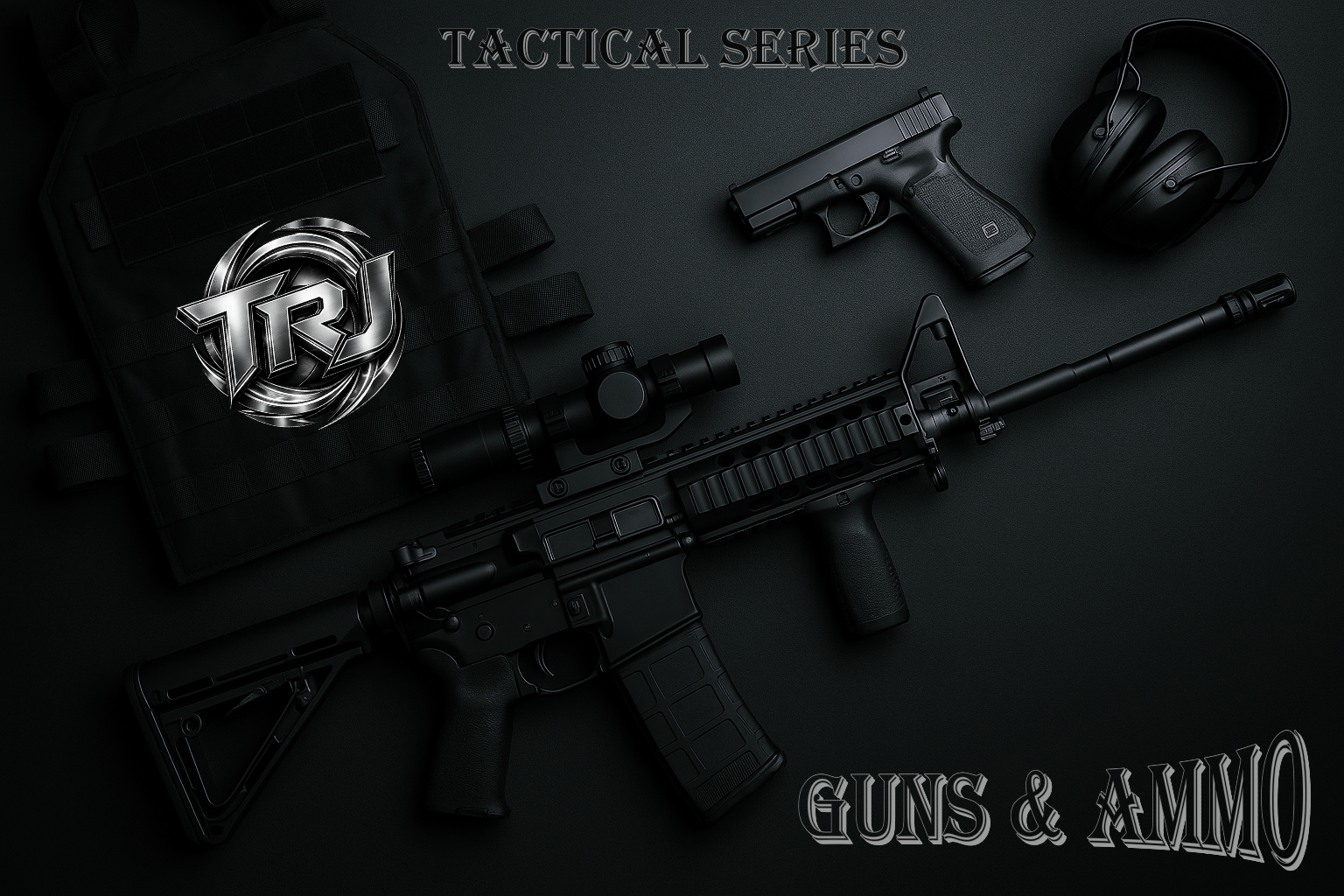
What lawmakers describe as a ban on “Glock-style” firearms is actually a sweeping restriction on the most commonly owned handguns in America, setting the stage for a massive constitutional showdown.
There was a time in America when firearm ownership was largely understood as a normal part of citizenship. Not because every person owned a firearm, hunted, or carried a handgun, but because the right itself was generally viewed as something that belonged to the people. Ordinary people, working people, farmers, laborers, tradesmen, business owners, veterans, and families understood that constitutional rights existed independently of whoever happened to occupy public office at any given moment. The Second Amendment was not written for a specific manufacturer, model, or political party. It was written as a constitutional protection that applied broadly to the people themselves.
That distinction matters because much of the modern firearm debate increasingly focuses on categories, definitions, classifications, features, and technical language that often obscures the larger question sitting underneath the entire discussion: Who ultimately decides which constitutional rights remain available to ordinary citizens? That question is rapidly moving to the forefront once again following New York’s new 2026-2027 state budget, which quietly tucked in a ban on the sale of what lawmakers describe as “Glock-style” handguns. Slated to take effect no later than June 1, 2027, the law prohibits dealers from legally selling firearms that many dealers argue are defined broadly enough to affect far more than a single manufacturer.
At first glance, many people may hear the phrase and assume lawmakers are targeting a single manufacturer. Glock is one of the most recognizable names in the firearms industry, easily identified by politicians, law enforcement, and the public, naturally making the name itself the center of attention. The controversy begins when people start asking exactly what constitutes a Glock-style handgun. As local New York dealers are pointing out, the deeper someone examines the issue, the larger the debate becomes. Glock is a handgun. Ruger is a handgun. Smith & Wesson is a handgun. As local gunsmiths are quickly pointing out, the new law targets transfer bars and internal designs used by multiple companies. Different companies, designs, price points, and histories all ultimately belong to the same broader category. They are handguns owned by ordinary citizens who purchased them legally and use them lawfully.
To supporters of the law, the legislation represents a public safety measure intended to address concerns surrounding illegal, aftermarket auto-sear switches. To opponents, the issue is not the Glock. The issue is whether government can effectively restrict access to a massive category of commonly owned handguns used by law-abiding citizens throughout the state while claiming the restriction applies only to a specific style of firearm. That distinction changes the entire conversation because once the discussion moves beyond a single manufacturer, it becomes a discussion about lawful ownership itself. “I think it’s basically just another gun grab,” says Dean Adamski of DD’s Ranch. “They take little piece by little piece from us… there’s not a single gun out there that they can produce that you can’t make some form of illegal.” Adamski argues that law-abiding citizens are not the individuals purchasing illegal conversion devices and notes that no one has inquired about buying such devices during his 25 years in business.
Millions of Americans legally own handguns for self-defense, home protection, and sport shooting. Millions have passed background checks, obtained permits where required, store their firearms responsibly, and have never committed a violent crime. Those individuals increasingly find themselves at the center of modern firearm policy debates despite having committed no wrongdoing whatsoever. The frustration becomes even more pronounced when examining who actually follows firearm laws in the first place. Criminals do not typically obtain firearms through legal channels, concern themselves with permit requirements, study compliance regulations, or carefully monitor legislative updates. Law-abiding citizens do. Every new regulation is studied by lawful owners, and every new compliance burden falls primarily upon the people already following the rules. Dealers themselves have acknowledged uncertainty regarding grandfathering provisions, leaving many owners wondering what the long-term impact of the legislation may ultimately be.
Gangs remain gangs, criminals remain criminals, and illegal trafficking remains illegal trafficking. The law-abiding citizen becomes the individual most directly impacted by legislation intended to address criminal behavior. That perception has fueled decades of frustration within firearm communities across the country, and for many New York gun owners, the latest legislation feels like another example of that same pattern repeating itself. The concern extends beyond ownership and bleeds directly into fairness, equal treatment, and questions regarding who receives exemptions and who does not. Industry professionals point out that law enforcement and private security heavily rely on these exact same firearms. Many firearm owners increasingly question why government officials and law enforcement agencies often maintain access to firearms that lawmakers simultaneously argue are inappropriate for ordinary citizens.
Supporters of such exemptions frequently argue that law enforcement faces unique responsibilities and dangers. Critics respond with a different question: If a firearm is considered acceptable for government personnel, why is it unacceptable for a law-abiding citizen seeking to protect themselves and their family?
The constitutional dimension may ultimately become the most significant aspect of the entire controversy. The debate is not simply about Glock, New York, or a single piece of legislation buried inside a state budget. The debate is about where constitutional protections begin and where government authority ends. The collision between those two positions will likely bypass political speeches and press conferences entirely. Once government begins restricting access to commonly owned firearms, constitutional challenges become almost inevitable.
Ultimately, the Second Amendment was not written to protect the government’s right to arm itself while slowly disarming the public. It was written to ensure the public retained the power to protect itself from the government. Our Second Amendment is slowly being eroded as we speak. If this continues to erode there will be no turning back.
THE INHERITANCE QUESTION
The inheritance issue may ultimately become one of the most significant aspects of the entire debate because firearm ownership often extends far beyond politics. Many firearms remain within families for decades, serving not only as tools for self-defense, hunting, sport shooting, or collecting, but also as family property passed from one generation to the next. Some were carried during military service. Some belonged to parents, grandparents, or other relatives whose lives remain connected to the firearm long after they are gone. For many owners, these firearms represent family history every bit as much as they represent personal property.
That reality raises questions extending well beyond the initial purchase. If future restrictions limit the transfer of certain firearms, many owners naturally begin asking what happens when an estate is settled, when property is inherited, or when firearms are passed to children and grandchildren. Supporters of the legislation may argue that the law focuses on future sales rather than existing ownership. Critics respond that ownership rights and transfer rights are inseparable. Property that cannot be transferred, inherited, sold, or lawfully passed to future generations gradually becomes something very different from what most Americans traditionally understand as ownership. The uncertainty surrounding those questions continues to fuel concern among firearm owners attempting to understand the long-term consequences of the legislation.
THE CRIMINAL QUESTION
The central argument raised by many opponents of firearm restrictions remains straightforward. Criminals generally do not concern themselves with permit requirements, compliance regulations, background checks, licensing procedures, or legislative updates. They do not seek legal guidance from dealers, carefully study changes in state law, or adjust their behavior to remain within regulatory boundaries. Law-abiding citizens do.
Every new firearm regulation ultimately requires compliance from individuals already attempting to follow the law. Every new restriction creates additional obligations for lawful owners, dealers, manufacturers, and businesses operating within legal channels. Critics argue that this creates a recurring pattern in modern firearm policy where the people most directly affected by new restrictions are often the people least responsible for the criminal conduct being cited as justification for those restrictions. Gangs remain gangs, illegal trafficking remains illegal trafficking, and violent offenders remain willing to violate laws regardless of how many additional regulations are imposed upon lawful citizens. For many firearm owners, that distinction remains at the center of the entire debate.
A NATIONWIDE LEGAL BATTLE
The constitutional showdown over these restrictions is already underway. New York is not the first state to attempt this, and earlier efforts have immediately met fierce legal resistance.
When California passed a nearly identical ban on handguns with a “cruciform trigger bar” in late 2025, the NRA and the Second Amendment Foundation immediately sued the state in federal court, arguing that banning a weapon in “common use” violates the Second Amendment.
Maryland is facing the exact same pushback. Just last month, when Maryland’s governor signed a similar ban on these handguns in May 2026, the Firearms Policy Coalition (FPC) and the NRA filed a federal lawsuit (NRA v. Moore) the very next day to seek a permanent injunction.
It is highly likely that New York’s new ban will face the exact same kind of federal lawsuit very soon, pushing the entire debate closer to the Supreme Court.
MORE THAN JUST GLOCK
When politicians and the media describe these restrictions as a “Glock ban,” they fail to communicate the true scope of the legislation. By specifically outlawing any semi-automatic pistol utilizing a “cruciform trigger bar,” the ban sweeps up far more than a single brand.
Because early Glock patents expired, the cruciform trigger bar design has been widely adopted or licensed across the firearms industry. Today, there are roughly 20 different manufacturers producing handguns that fall under this definition, ranging from direct “Glock clones” to completely independent designs.
This single line of legislation effectively outlaws massive segments of the modern handgun market. It targets budget-friendly imports like Stoeger’s STR-9 series, Derya Arms, and SAR USA. It targets wildly popular domestic models like the Palmetto State Armory (PSA) Dagger line and the newly released Ruger RXM. And it sweeps up high-end, custom-built firearms from boutique manufacturers like ZEV Technologies, Shadow Systems, Lone Wolf, and Faxon Firearms.
By focusing on a standard internal mechanical component rather than a specific manufacturer, the government is not just banning Glocks. They are effectively banning an entire generation of modern, commonly owned self-defense firearms under a single, sweeping definition.
TRJ VERDICT
What began as a discussion about so-called “Glock-style” handguns has evolved into something much larger. The debate is no longer centered on a single manufacturer, a single design feature, or even a single category of firearm. It has become a broader argument about constitutional limits, lawful ownership, equal treatment under the law, property rights, inheritance rights, and the relationship between government authority and individual liberty.
Supporters of the legislation view the restrictions as a public safety measure intended to address concerns surrounding illegally modified firearms and conversion devices. Opponents view the legislation through a different lens. They argue that criminals already ignore firearm laws, while law-abiding citizens, dealers, and businesses bear the overwhelming burden of compliance. They question whether restrictions aimed at criminal misuse ultimately place greater limitations on lawful ownership than on criminal behavior itself.
The uncertainty surrounding the legislation has only intensified those concerns. Dealers continue seeking clarification regarding implementation. Owners continue asking questions regarding future transfers, inheritance, and long-term ownership rights. Critics continue questioning why firearms considered appropriate for government personnel and law enforcement are increasingly viewed as inappropriate for ordinary citizens.
The most significant question may ultimately be the simplest one. If constitutional rights can be narrowed through expanding definitions, evolving classifications, and increasingly broad restrictions, where does that process end? At what point does regulation cease being regulation and begin becoming prohibition?
As we are already seeing across the country, these questions will not be settled through political speeches, campaign slogans, or press conferences. The battle lines have been drawn in federal courtrooms, where judges are now being asked to determine exactly where constitutional protections end and government authority begins.
The debate is not really about the Glock.
The debate is about who decides which rights remain available to ordinary citizens and which rights can be restricted in the name of public policy.
That question may ultimately prove far more important than any single firearm ever could.
For those who don’t know, the ban on “convertible pistols” (those with a cruciform trigger bar) takes effect no later than June 1, 2027.
The Proof is in the Legislation: If you want to see exactly how this ban works, you can download the official bill below. The text itself proves this is not just a “Glock” ban. It targets any handgun with a “cruciform trigger bar,” sweeping up countless commonly owned firearms, while simultaneously granting special exemptions for government and law enforcement personnel on page two. Read the full document below. (Free Download)
Important note: Constitutional rights do not protect themselves. They rely on the vigilance and active engagement of the citizens who hold them. If law-abiding Americans do not stand up to defend their Second Amendment, First Amendment, or any of our protected rights today, they risk watching those rights be legislated out of existence tomorrow. The time to protect lawful ownership is now, because once a fundamental right is surrendered, it is usually never given back.


🔥 NOW AVAILABLE! 🔥
🔥 NOW AVAILABLE! 🔥
📖 INK & FIRE: BOOK 1 📖
A bold and unapologetic collection of poetry that ignites the soul. Ink & Fire dives deep into raw emotions, truth, and the human experience—unfiltered and untamed
🔥 Kindle Edition 👉 https://a.co/d/9EoGKzh
🔥 Paperback 👉 https://a.co/d/9EoGKzh
🔥 Hardcover Edition 👉 https://a.co/d/0ITmDIB
🔥 NOW AVAILABLE! 🔥
📖 INK & FIRE: BOOK 2 📖
A bold and unapologetic collection of poetry that ignites the soul. Ink & Fire dives deep into raw emotions, truth, and the human experience—unfiltered and untamed just like the first one.
🔥 Kindle Edition 👉 https://a.co/d/1xlx7J2
🔥 Paperback 👉 https://a.co/d/a7vFHN6
🔥 Hardcover Edition 👉 https://a.co/d/efhu1ON
Get your copy today and experience poetry like never before. #InkAndFire #PoetryUnleashed #FuelTheFire
🚨 NOW AVAILABLE! 🚨
📖 THE INEVITABLE: THE DAWN OF A NEW ERA 📖
A powerful, eye-opening read that challenges the status quo and explores the future unfolding before us. Dive into a journey of truth, change, and the forces shaping our world.
🔥 Kindle Edition 👉 https://a.co/d/0FzX6MH
🔥 Paperback 👉 https://a.co/d/2IsxLof
🔥 Hardcover Edition 👉 https://a.co/d/bz01raP
Get your copy today and be part of the new era. #TheInevitable #TruthUnveiled #NewEra
🚀 NOW AVAILABLE! 🚀
📖 THE FORGOTTEN OUTPOST 📖
The Cold War Moon Base They Swore Never Existed
What if the moon landing was just the cover story?
Dive into the boldest investigation The Realist Juggernaut has ever published—featuring declassified files, ghost missions, whistleblower testimony, and black-budget secrets buried in lunar dust.
🔥 Kindle Edition 👉 https://a.co/d/2Mu03Iu
🛸 Paperback Coming Soon
Discover the base they never wanted you to find. TheForgottenOutpost #RealistJuggernaut #MoonBaseTruth #ColdWarSecrets #Declassified


Sponsored • TRJ Ads
Inquiries: contact@therealistjuggernaut.com