Thank you for reading or listening to The Realist Juggernaut. Independent journalism should be accessible to everyone.
You wake up heavier than when you went to bed. Not just tired — drained.
As if the night itself siphoned something out of you and left behind only the husk.
It isn’t the exhaustion you feel after a restless night. It’s different.
This is a hollowness that sits in your bones, a strange vacancy behind the eyes.
You stretch, you drink water, you move around — but the weight doesn’t lift.
And the dream you just left? It wasn’t even terrifying.
No wild chase through impossible streets, no monsters tearing at the edges of reality.
Maybe it was a strange conversation with a stranger you somehow knew.
Maybe it was a shadow that stayed too close, always at your back.
Or maybe it was a presence — just out of focus — that you never turned to face, because something deep inside whispered: Don’t look.
And yet, when you opened your eyes, it felt like that presence had followed you back.
Like it hadn’t been left behind in the dream at all. Like you weren’t waking up alone.
For centuries, cultures around the world have spoken of night feeders — unseen forces, entities, or thoughtforms that attach themselves to the dreamer, drawing from their emotional, spiritual, or even physical energy while they sleep. In some traditions, they are spirits.
In others, they are psychic constructs — made real and given hunger by the power of human fear.
In the language of folklore, superstition, and esoterica, their names change, but the warning does not:
When they find you, you feel it.
It’s not subtle and it’s not polite.
It’s a theft you experience — and the proof is in the way you rise in the morning, already diminished.
In this entry, we’ll explore:
- The signs that something is feeding from you in dreams
- Historical and cultural accounts of these so-called “dream feeders”
- Psychological and metaphysical interpretations of the phenomenon
- The link between trauma, stress, and susceptibility
- And most importantly — how to protect your dreamspace
Because if something can feed on you while you sleep… then dreaming isn’t just a journey. It’s a hunt. And sometimes, you’re not the one doing the hunting.
Recognizing the Signs of a Dream Parasite
Not every nightmare is a parasite. Not every disturbing dream is an attack.
Some are nothing more than the subconscious sorting its clutter. But when something feeds in your sleep, the aftereffects aren’t subtle — and they don’t vanish with the morning light. They leave fingerprints. Not always inside the dream, where you can confront them…
but in the hours, and sometimes days, that follow.
Common markers include:
- Unnatural exhaustion — Waking up feeling worse than when you went to bed. Not just tired, but drained in a way that even strong coffee, sunlight, or a brisk walk can’t shake. Your body feels like it’s been working all night on something you can’t name.
- Emotional hijacking — Carrying emotions that aren’t yours. You wake with sudden despair, irrational irritability, hopelessness, or fear that has no logical trigger in your waking life. It sits in you like a residue, refusing to leave.
- Dream repetition — The same presence, place, or figure returning again and again. Sometimes they change form, sometimes they wear a different face — but you know it’s the same entity because of the feeling they carry. They never leave.
- The Watcher Effect — That bone-deep sense of being observed. You might not see the source in your dream, but you feel it — an awareness that locks onto you and doesn’t let go, as though you’ve been marked.
- Physical echo — Waking with unexplainable aches, tension, or pressure — especially around the chest, back, or solar plexus. These sensations fade, but the memory of their presence lingers uncomfortably.
- Memory gaps — Dreams that feel abruptly cut off, as if part of the experience has been removed, blurred, or intentionally hidden. You remember the beginning, you remember the end, but not what happened in between.
Some oneironauts describe these encounters as subtle hauntings.
Not violent. Not cinematic.
But consistent — wearing you down drop by drop, night after night, until you feel less like yourself.
Others speak of them more bluntly:
“It’s like something plugged into me while I slept — and when I woke up, it was still pulling.”
The truth is simple: if these markers appear once, it may be coincidence.
If they appear repeatedly — and especially if the same “presence” returns over and over — you can no longer assume you’re alone in your dreamspace. And if something else is there, night after night, watching and taking? It’s not just a dream anymore. It’s a pattern. And patterns demand attention.
Historical and Cultural Accounts of Dream Feeders
The idea of something feeding on the sleeper is not new.
It’s older than modern psychology, older than the written word.
It appears in myths, folklore, and spiritual warnings across continents and centuries — always described differently, but always carrying the same unnerving core truth: You are not alone in the dark.
Mesopotamia —
Ancient clay tablets from Sumer and Akkad tell of Lilu and Lilitu, wandering spirits said to visit sleeping humans and “drink” from their life force. These beings often appeared in early demonology as harbingers of fatigue, sudden sickness, or withered vitality. Some texts suggest they targeted those in emotional distress or physical weakness, striking when the dreamer’s defenses were lowest.
Medieval Europe —
The “Mare” of nightmare fame was never originally a dream at all — but a being.
Accounts describe a crushing, suffocating force that sat on the chest of sleepers, pressing the breath from their lungs and leeching their energy until they awoke in panic. Physicians of the era had no explanation beyond calling it a visitation, while survivors swore it was not hallucination but assault.
Japan —
Folklore warns of Kanashibari, a supernatural paralysis in which a spirit pins you down mid-sleep. Victims describe an oppressive weight above them — sometimes faceless, sometimes shifting — feeding not on blood or flesh, but on the pure fear generated by its presence. In many accounts, this feeding left the dreamer trembling and depleted for hours afterward.
South America —
Within certain Amazonian traditions, shamans speak of “energy thieves” — parasitic entities drawn to those weakened by illness, grief, or spiritual imbalance. They attach during dreams, siphoning off vitality to sustain themselves. In these traditions, a dream attack is often treated as seriously as a physical illness — sometimes more so.
West Africa —
Among some tribes, the phenomenon of witch-riding is feared: a nocturnal assault in which an unseen presence mounts the dreamer’s body in the night. Victims awaken sore, drained, and spiritually “hollowed.” Elders teach protective rituals before sleep — not as superstition, but as survival.
Despite the vast cultural differences, the patterns align with striking precision:
- A recurring presence that is not entirely of the dreamer’s making.
- A deep, unnatural draining of energy upon waking.
- A shared belief that the dream-state renders the dreamer vulnerable.
Some accounts call these forces spirits.
Others claim they are thoughtforms, born from centuries of human fear yet now independent enough to hunt on their own.
And a few suggest they are something stranger — actual entities that cross the thresholds between consciousnesses, bypassing every boundary we think exists between mind and mind.
Every tradition carries the same warning:
Protect yourself before you sleep — or risk waking up with less than you went in with.
Because if history is to be believed, the dreamworld has never been empty.
It has always been inhabited. And not all its inhabitants mean you well.
Psychological and Metaphysical Interpretations
Today, the conversation about dream parasites straddles two worlds — worlds that rarely agree, yet circle the same shadows.
On one side stands psychology, armed with clinical models, neurobiology, and the language of cognitive science. Here, dream parasites are reframed as manifestations of unprocessed trauma, stress loops, or subconscious archetypes. They are said to be mental constructs born from fear, grief, or anxiety, appearing in symbolic form because the mind seeks to “show” rather than simply “tell.” Under this view, the draining sensation upon waking might be explained by disrupted REM cycles, adrenal fatigue from recurring nightmares, or even somatic tension carried into sleep.
On the other side stands metaphysics, which takes these experiences at face value — treating them not as projections of the mind, but as literal presences. In this paradigm, the dream state is not a sealed bubble of imagination but an open field where consciousness interacts with other beings, energies, and dimensions. Here, dream parasites are not symptoms, but intruders — entities that operate in the liminal gap between physical and astral, preying on the unaware.
Both lenses hold value. Both explain part of the phenomenon. And yet neither fully explains it away.
Psychology can dissect the mechanics of fear and fatigue, but it struggles to account for the shared dream narratives between people who have never met, or for the way certain dream figures return with unnerving consistency over months or years.
Metaphysics offers the vocabulary of intrusion, energy exchange, and spiritual predation, but it risks leaning too heavily on belief, making proof elusive and the conversation too easy to dismiss.
What’s most intriguing is that even in clinical studies, when stripped of all supernatural framing, many dreamers still describe an “otherness” in their encounters — a sense that what they met in the dream was autonomous, self-directed, and not merely a fragment of their own psyche.
This raises a possibility both worlds must contend with: If consciousness is not confined to the body, then the dreamstate may be the crossroads where internal and external realities meet. And in such a place, the difference between symbol and entity might not be a difference at all — but a spectrum.
The Psychological View
From a clinical standpoint, the sensation of “something feeding” in dreams is often reframed as the mind’s attempt to translate physical, emotional, and neurological events into a narrative the dreamer can process. In this model, nothing supernatural has occurred — yet the experience still feels intensely real because the brain excels at building stories to make sense of unfamiliar sensations.
Sleep Paralysis Overlay — In this state, the brain partially wakes while the body remains locked in REM atonia — the natural paralysis that prevents us from physically acting out our dreams. The mismatch between waking awareness and a paralyzed body can spark hypnopompic hallucinations — vivid, often terrifying imagery shaped by primal fear responses. Because the mind searches for an explanation, it may project an intruder into the scene: a shadow at the bed’s edge, a weight on the chest, or a face leaning too close. This sensory confusion makes it feel like something external is interacting with you, even though the source is internal.
Emotional Catharsis — Dreams are a processing ground for our waking-life stress, conflict, and unspoken emotions. If you’re in a situation where your time, energy, or sense of self is constantly being drained — whether through toxic relationships, exploitative work environments, or unresolved trauma — your dreamworld may render that burden as a literal feeding presence. Here, the “parasite” functions as a symbolic stand-in for the people, situations, or systems that are depleting you. The body feels the strain, and the dream gives it a face.
Somatic Feedback Loop — The body doesn’t sleep in isolation from the mind. Physical conditions — from sleep apnea and respiratory restriction to illness, dehydration, or muscle tension — can create real bodily sensations during sleep. The dreaming mind, unable to interpret them directly, crafts imagery to match: a being pressing down, pulling something out, or lingering just overhead. In this way, a cramp, a breathing struggle, or an irregular heartbeat can be reinterpreted as the presence of a dream parasite.
In psychological terms, the “feeding” is metaphor and misinterpretation — a vivid expression of internal stressors and physiological signals.
Yet even in this grounded explanation, there’s an acknowledgment: these dreams often carry a weight that lingers beyond the morning, refusing to be dismissed as “just a dream.” That persistence is why, for many, the psychological view feels like only part of the truth.
The Metaphysical View
From an esoteric standpoint, these encounters are not symbolic constructs or mistaken dream imagery — they are actual exchanges of energy between conscious entities, with the dreamer functioning as both participant and resource. In this framework, the “parasite” is not a metaphor for stress or trauma. It is a presence with intent, one that has chosen you, even if you never consciously invited it.
Entity Attachments — Independent, non-physical beings said to exist alongside — but just outside — our waking reality. They are not necessarily “evil” in the moral sense, but they are parasitic in nature, drawing from the dreamer’s emotional charge, life force, or subtle energy field. They are often drawn to fear, grief, chronic instability, or lingering trauma, using these states as open doorways. Once attached, they may return night after night, their familiarity allowing them to blend into your dreamscape until you no longer question their presence.
Thoughtforms / Egregores — In occult theory, sustained attention and belief can give rise to autonomous psychic constructs — beings born entirely from mental and emotional energy. Some emerge from collective belief systems and are fed by the mass attention of many dreamers; others are personal creations, birthed in moments of extreme emotion. Once formed, they develop a kind of hunger, seeking continued sustenance from those who unconsciously maintain their existence.
Lower Astral Predators — In metaphysical teachings, the “lower astral” is a dense vibrational layer overlapping both the dream and astral realms. It is often described as a predatory ecosystem, where opportunistic entities roam for unshielded travelers — especially those who drift into this layer during sleep. Here, energy is currency, and fear is the most valuable commodity. The dreamer’s unawareness becomes the predator’s camouflage.
From this perspective, vulnerability isn’t physical — it’s energetic. Your openness, your emotional turbulence, your mental preoccupation before sleep — all of these create gaps in the protective “field” around you. Without intention or shielding, you may as well leave your psychic door unlocked.
Metaphysical practitioners often stress that the aftermath of such encounters is not imagined residue, but a real energetic impact. The fatigue, the emotional heaviness, the persistent sense of intrusion — these are the markers of a transaction that took place without your consent.
Whether you believe these forces are literal beings or the externalized shapes of your own psyche, the experience leaves the same unmistakable signature:
something came into your space — and took something with it.
And impact demands strategy.
The Link Between Trauma, Stress, and Susceptibility
Dream parasites don’t attach to everyone equally.
Some people drift through decades of peaceful sleep without ever waking to the sense of having been fed upon. Others find themselves revisited, again and again, as if some unseen mark has been placed upon them. The difference often lies in energetic vulnerability — and two of the most common gateways are unresolved trauma and chronic stress.
Trauma fractures boundaries. When a person endures extreme emotional, physical, or psychological harm, it doesn’t just leave scars in the conscious mind — it alters the energetic field they carry into every state of being, including dreams. In metaphysical terms, trauma can create permanent cracks in the psychic shield, leaving openings where foreign influence can slip through. Even years after the triggering event, those fractures may remain, activated under certain emotional conditions or during vulnerable sleep cycles.
Chronic stress weakens defenses. Long-term exposure to relentless pressure — whether from financial hardship, toxic relationships, unsafe environments, or grinding overwork — has a cumulative effect. It erodes the body’s ability to recover, depletes the mind’s resilience, and leaves the spirit fatigued. In this depleted state, the dreamer’s subconscious is less able to filter, deflect, or transmute unwanted influences. What might bounce harmlessly off a well-rested, grounded person can instead latch on to someone already worn thin.
There is also a psychological bridge between these two states. Trauma often leads to hypervigilance in waking life, while stress breeds exhaustion. In the dream realm, this combination can produce a dangerous paradox — a mind that is hyper-aware of threat but too drained to defend against it. It is here that many report their first encounters with dream feeders: the sense of being watched, the return of a recurring presence, the heaviness upon waking.
From the metaphysical view, trauma and stress both broadcast signals into the subtle realms — vibrations that certain entities interpret as invitations or opportunities. From the psychological perspective, these conditions prime the brain for intrusive imagery and heightened dream recall, making parasitic dreams more noticeable and more impactful.
Either way, the link is undeniable:
When the mind is unsettled and the spirit is unguarded, the dreamspace becomes less a sanctuary and more a hunting ground. And in that hunting ground, the odds of being targeted rise sharply.
Why Trauma Opens the Door
Trauma — whether born from childhood neglect, abusive relationships, violence, sudden loss, or any event that shatters the foundation of trust — leaves more than memory in its wake. It alters the way a person inhabits themselves. In energetic terms, trauma leaves fissures in the personal field — cracks that run deep into the architecture of the self.
Under ordinary circumstances, a person’s energetic boundaries act like a natural membrane: flexible, self-repairing, and resistant to intrusion. But when trauma scars form, that membrane becomes inconsistent. Some areas may harden into hyper-defensive walls, while others remain brittle and thin. Those weakened areas function like open windows in an unguarded house — easy access points for anything, internal or external, that knows how to slip through.
When sleep arrives, the vigilant watch of the conscious mind finally releases its grip. The fight-or-flight edge dulls, but the damage remains. The very act of letting go to rest can make those cracks more visible to whatever moves in the subtle spaces. This is why so many report that the worst encounters come not during waking fear, but in the soft hours of the night — when the guard is down, and the doorway stands open.
How Stress Amplifies the Risk
If trauma creates the cracks, chronic stress is the slow, relentless rain that seeps into them and widens the damage. Stress, by nature, is an energy thief. It demands more than the body can sustainably give, keeping the nervous system in a low-grade state of emergency. Over time, this constant drain thins the energetic field, making it easier for influence — benign or predatory — to get through.
From a physical perspective, stress disrupts sleep cycles, destabilizes hormone regulation, and compromises immune function — all of which weaken the dreamer’s resilience. From a metaphysical standpoint, stress radiates a frequency of instability that can act as a beacon. In certain planes of consciousness, instability signals opportunity, and there are entities — whether thoughtforms, astral predators, or something else — that respond to that signal.
Even stress dreams themselves can mimic parasitic contact. The dream mind, already attuned to tension, may populate its landscapes with watchers, pursuers, or looming presences. But in some cases, those dreams aren’t just the mind reflecting its own unrest — they’re an invitation being answered.
The Feedback Loop
Trauma and stress rarely operate as one-time vulnerabilities. More often, they work in tandem to keep a person in a sustained state of openness. An energy-draining dream doesn’t just end when you wake; it leaves a residue that follows you into the day. That exhaustion reduces your capacity to cope with stress, which in turn weakens your defenses even further when you return to sleep.
In this way, the parasitic encounter can become self-perpetuating. The more it happens, the more worn down you become — and the more worn down you become, the more it happens. For some, this cycle continues until the dream presence becomes almost routine, its arrival as familiar as it is unwelcome.
Both the psychological and metaphysical interpretations point toward the same conclusion: to break the cycle, you have to repair the system. That means addressing the cracks that trauma has left behind, reducing the constant leak of stress, and re-establishing boundaries before entering the dreamspace. Protection begins not at the moment of sleep, but in the hours — and sometimes years — before it.
Protecting Your Dreamspace
If the dreamworld truly is a shared space — and if there are feeders moving within it — then protection isn’t just a nice idea. It is survival.
You wouldn’t leave your front door wide open in the middle of the night, lights off, valuables in plain sight, and trust that nothing with bad intentions will wander in.
Yet, every time you close your eyes without preparation, that’s exactly what many people do in sleep.
A defended dreamer is far harder to reach than an unguarded one. And like fortifying any stronghold, protection is strongest when built on multiple fronts. In the context of dream safety, those fronts are mental, energetic, and environmental. Each one reinforces the others, creating a layered barrier that can stop both psychological intrusions and metaphysical trespass.
The stronger you build all three, the more you shift from being a passive sleeper to an active sovereign over your inner space.
Mental Fortification — Set the Narrative Before Sleep
Your subconscious is the architect of your dreamspace, and if you don’t give it the blueprints, something else might. Mental fortification begins with setting intention, shaping the story before you enter it, and reminding yourself that the final say belongs to you.
- Intentional Closing — Before bed, take a moment to anchor your will. State aloud, whisper, or silently affirm:
“This space is mine. Nothing enters without my permission.”
Words carry weight in the dream realm because the subconscious treats them as law. - Dream Programming — As you drift toward sleep, picture your dreamspace as a walled garden, a fortress, or a sphere of light. Plant guardian figures or symbolic protectors inside. Whether you believe in metaphysics or not, your mind will carry these visual seeds into the dream and use them as anchors.
- Lucid Awareness Training — Practice recognizing dream signs — recurring themes, impossible scenarios, or distortions in logic. Once lucid, you can directly confront or remove unwanted presences, rewrite the environment, or dissolve the dream entirely. Awareness is the sword in your dream arsenal.
Energetic Defense — Strengthen the Field
If the body is the shell, the energetic field is the boundary. Parasites, whether literal or symbolic, exploit weaknesses in that field. Strengthening it doesn’t just make you harder to breach — it changes your signal entirely, making you less of a target.
- Grounding Practices — Engage in breathwork, meditation, or mindful movement before bed. The goal is to stabilize your baseline energy, so you enter sleep calm, balanced, and fully present. Chaos attracts chaos.
- Cleansing Rituals — Across traditions, certain acts are believed to reset or clear residual energy: burning sage or palo santo, using a salt bath, ringing a bell, or simply airing out the room. Even skeptics benefit from the psychological closure these acts create.
- Energy Seals — Visualize light — gold, silver, white, or any color that resonates with safety — wrapping your entire body like a second skin. Seal the top of your head, your heart, and the soles of your feet with that same light or with symbols you trust. This is your armor, woven from attention and intention.
Environmental Safeguards — Set the Physical Stage
The space you sleep in is not neutral. Every object, every sound, every shadow contributes to the atmosphere in which your subconscious operates. A chaotic or emotionally charged environment is like leaving clutter on the battlefield — it creates cover for things you don’t want moving through your space.
- Remove Energetic Clutter — Clear your sleeping area of items tied to unresolved grief, toxic relationships, or emotionally heavy events. These objects can act like anchors, holding energy you don’t want in the room.
- Protective Talismans — Many traditions place wards or charms near the bed: iron nails, black tourmaline, obsidian, quartz, or culturally significant amulets. Whether symbolic or energetic, these act as static defenses against intrusion.
- Sound & Frequency — White noise, pink noise, binaural beats, or targeted frequencies (528 Hz for restoration, 432 Hz for harmony) can set the subconscious into a balanced state. These sounds also help mask environmental “energetic noise” that can bleed into dreams.
The Rule of the Strong Mind
Every physical, mental, or energetic tool has one thing in common: it is only as effective as the belief behind it. Even in the most metaphysical frameworks, conviction acts as the lock. Parasites — whether figments of the psyche or external entities — are opportunists. They gravitate toward uncertainty because uncertainty is soft ground.
Certainty, on the other hand, is armor. A mind that believes it cannot be breached is infinitely harder to breach.
Defending your dreamspace isn’t about paranoia, superstition, or fear. It is about sovereignty — the right to decide who or what has access to you, even when your eyes are closed.
Whether you explain the threat with neurology or the astral, the mission is the same:
Sleep should restore you, not strip you.
Conclusion — When the Hunter Finds You in Sleep
Dreams should be your territory — a vast, private expanse where you can wander, explore, and shape the strange architecture of your own mind. A place where memory and imagination blend without consequence.
But not every dream belongs solely to the dreamer.
And not everything that walks there comes as a guest.
When you wake with your mind strangely clear but your body unnervingly heavy…
when a shadow in your dream seems less like a background figure and more like a focused observer…
when a presence returns night after night, always just beyond reach, as if studying you before the strike — you may have crossed paths with a feeder.
Across cultures, they have been warned about. In science, they are given softer names, stripped of teeth and mystery. In lived experience, they are as old as the act of closing your eyes — a quiet predation that has survived in silence because it leaves no obvious wound.
Skeptics will say they are nothing more than projections — the shapes our minds give to stress, trauma, or buried guilt. Metaphysicians will tell you they are alive — and that your vitality is their currency.
It doesn’t matter which is right. The effect is the same: they take. You wake with less.
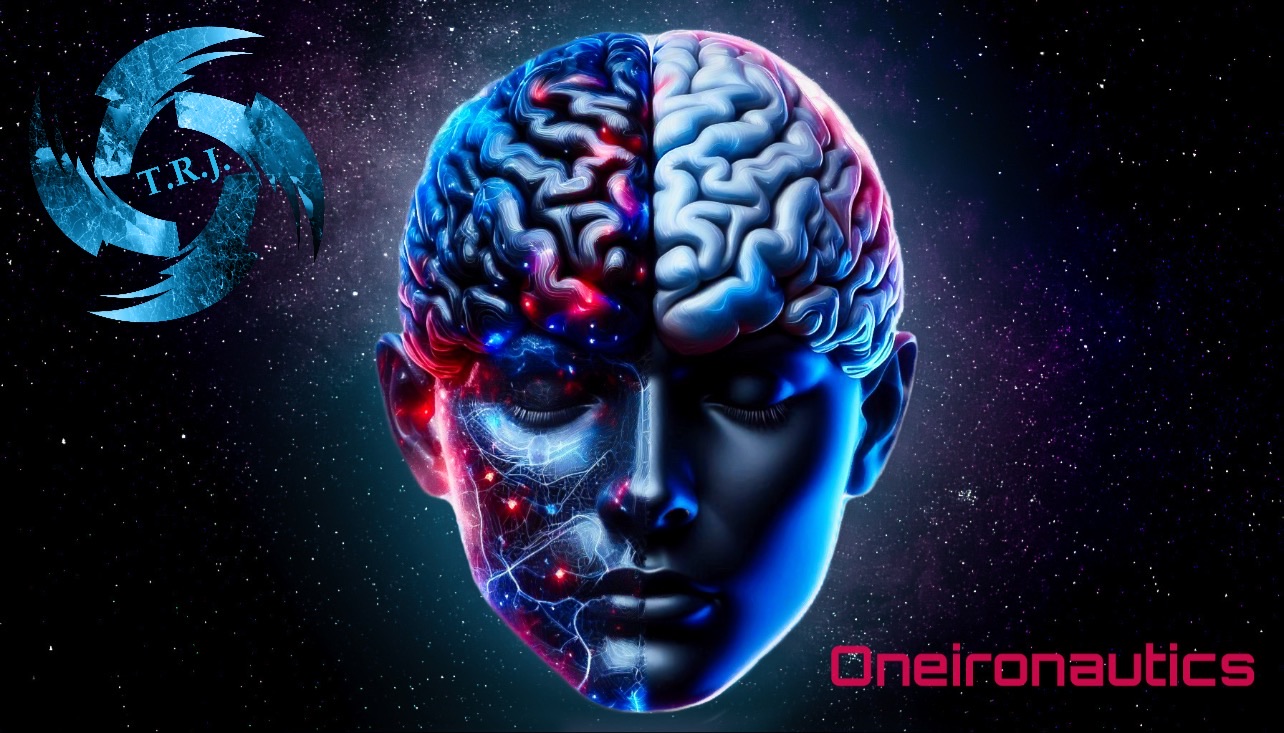
This is why, in the discipline of Oneironautics, dream parasites matter.
To master the dream realm, you must first claim dominion over it.
To walk there without fear, you must fortify yourself — not only against the bizarre landscapes your subconscious can create, but against what may already be waiting for you inside them.
So the next time you feel a watchful stillness in the corner of your dream… the next time you wake up more exhausted than you were before sleep… the next time you sense hunger that is not your own — remember: The hunter found you once. Whether it feeds again depends entirely on how you guard the gate. Strengthen your mind. Seal your field. Sleep as if the world you enter is not empty — because it isn’t. Sleep as if something depends on it — because maybe… it does.
🔥 NOW AVAILABLE! 🔥
📖 INK & FIRE: BOOK 1 📖
A bold and unapologetic collection of poetry that ignites the soul. Ink & Fire dives deep into raw emotions, truth, and the human experience—unfiltered and untamed.
🔥 Kindle Edition 👉 https://a.co/d/9EoGKzh
🔥 Paperback 👉 https://a.co/d/9EoGKzh
🔥 Hardcover Edition 👉 https://a.co/d/0ITmDIB
🔥 NOW AVAILABLE! 🔥
📖 INK & FIRE: BOOK 2 📖
A bold and unapologetic collection of poetry that ignites the soul. Ink & Fire dives deep into raw emotions, truth, and the human experience—unfiltered and untamed just like the first one.
🔥 Kindle Edition 👉 https://a.co/d/1xlx7J2
🔥 Paperback 👉 https://a.co/d/a7vFHN6
🔥 Hardcover Edition 👉 https://a.co/d/efhu1ON
Get your copy today and experience poetry like never before. #InkAndFire #PoetryUnleashed #FuelTheFire
🚨 NOW AVAILABLE! 🚨
📖 THE INEVITABLE: THE DAWN OF A NEW ERA 📖
A powerful, eye-opening read that challenges the status quo and explores the future unfolding before us. Dive into a journey of truth, change, and the forces shaping our world.
🔥 Kindle Edition 👉 https://a.co/d/0FzX6MH
🔥 Paperback 👉 https://a.co/d/2IsxLof
🔥 Hardcover Edition 👉 https://a.co/d/bz01raP
Get your copy today and be part of the new era. #TheInevitable #TruthUnveiled #NewEra
🚀 NOW AVAILABLE! 🚀
📖 THE FORGOTTEN OUTPOST 📖
The Cold War Moon Base They Swore Never Existed
What if the moon landing was just the cover story?
Dive into the boldest investigation The Realist Juggernaut has ever published—featuring declassified files, ghost missions, whistleblower testimony, and black-budget secrets buried in lunar dust.
🔥 Kindle Edition 👉 https://a.co/d/2Mu03Iu
🛸 Paperback Coming Soon
Discover the base they never wanted you to find. TheForgottenOutpost #RealistJuggernaut #MoonBaseTruth #ColdWarSecrets #Declassified
Support truth, health, and preparedness by shopping the Alex Jones Store through our link. Every purchase helps sustain independent voices and earns us a 10% share to fuel our mission. Shop now and make a difference!
https://thealexjonesstore.com?sca_ref=7730615.EU54Mw6oyLATer7a

Sponsored • TRJ Ads
Inquiries: contact@therealistjuggernaut.com