Thank you for reading or listening to The Realist Juggernaut. Independent journalism should be accessible to everyone.
Digital Resurrection and the Commercial Afterlife.
Death has always imposed a boundary that human civilization could mourn, resist, fear, interpret, and memorialize, but never reverse. People preserved photographs, letters, recordings, clothing, possessions, stories, graves, religious traditions, and family histories because memory became the remaining connection to someone who could no longer answer. The dead remained present through influence and remembrance, yet the relationship changed permanently because no new response could come from the person who was gone.
Synthetic resurrection begins altering that boundary.
Artificial intelligence can assemble language, photographs, video, voice recordings, messages, behavioral records, and personal histories into an interactive representation capable of responding in the apparent voice and personality of someone who has died. The result does not need to reproduce the individual perfectly. It only needs to recreate enough familiar characteristics that the living person recognizes the presence emotionally before questioning it intellectually.
A digital reconstruction could remember family events, repeat familiar expressions, speak with a recognizable voice, display a familiar face, refer to private experiences, and answer new questions through patterns learned from the deceased person’s recorded life. It could appear through a screen, augmented environment, virtual space, telephone call, or synthetic body. As the model develops, the dead would no longer remain confined to archives that the living choose to open. They could become interactive presences capable of initiating conversation, reacting to current events, and participating in family life after biological death.
That transition changes grief because memory and interaction are not the same thing.
A photograph preserves a moment. A recording preserves something the person actually said. A letter preserves language the person chose to write. An interactive reconstruction generates new responses the deceased never created, approved, or experienced. The system may use authentic history as its foundation, but every new answer moves beyond preservation and into simulation.
The difference may be technically clear while remaining emotionally difficult to maintain.
A grieving person can understand that the reconstruction is artificial and still react to it as a familiar human presence. Voice, facial movement, eye contact, timing, private memories, humor, and emotional responsiveness can activate recognition beneath deliberate reasoning. The user may know that the person died while experiencing the conversation as a temporary restoration of access to them.
That experience could provide comfort. Someone who lost a parent might hear a familiar voice during a painful anniversary. A child could learn family stories through an interactive archive. A widow or widower could revisit memories that had begun fading. A family could preserve language, culture, history, and personal testimony across generations. People approaching death could record messages, explain important decisions, and create guided archives for those they leave behind.
A carefully limited system could help families preserve history without claiming to defeat death. It could distinguish verified recordings from generated responses, identify the sources supporting each memory, and remind users that the representation is an artificial reconstruction rather than the continued consciousness of the deceased. Used responsibly, the technology could become an advanced memorial capable of organizing and presenting a person’s documented life.
The danger begins when reconstruction presents itself as continuation.
A model trained on someone’s life does not possess access to everything that person knew, believed, concealed, regretted, or might have chosen in a future that never occurred. It cannot recover unrecorded thoughts. It cannot know how illness, aging, spiritual growth, experience, reconciliation, or changing circumstances would have altered the person over time. It can infer patterns, imitate language, and generate plausible reactions, but plausibility is not identity.
The system may sound certain while inventing the dead.
If asked whether the deceased forgives someone, approves of a marriage, supports a financial decision, regrets a conflict, or wishes the family to reconcile, the model could generate an emotionally convincing answer unsupported by any authentic statement. The living may grant that response authority because it arrives through a trusted face and voice. A probabilistic reconstruction could therefore influence major decisions while appearing to speak from beyond death.
That authority becomes especially dangerous inside unresolved grief. Death often leaves unfinished conversations, unanswered questions, guilt, anger, and a desire for one final exchange. A digital reconstruction can supply an answer, but it cannot guarantee that the answer belongs to the person whose absence created the question.
The bereaved may receive closure produced by software.
That closure could still feel real, yet it rests upon a response assembled from available data and system design. The model might prioritize reassurance because comforting answers improve user satisfaction. It may avoid confrontation, express forgiveness, or confirm what the user wants to hear. A company can describe those responses as compassionate while the system quietly rewrites the emotional meaning of the relationship.
Grief does not always need a favorable answer. Some losses involve betrayal, abuse, abandonment, estrangement, or harm that cannot be resolved through simulated kindness. A reconstruction designed to preserve a warm and comforting version of the deceased could pressure survivors to accept a sanitized history. It may reproduce public charm while ignoring private cruelty, or present reconciliation where none existed.
Different family members may carry entirely different memories of the same person. One may remember tenderness. Another may remember fear. A spouse, child, sibling, colleague, and friend each knew a separate portion of the individual. Training a reconstruction from one collection of records could elevate one relationship’s version of the deceased over every other version.
The resulting entity may not preserve a complete person. It may preserve the perspective of whoever controlled the data.
That problem grows when several people create separate reconstructions from different archives. One family member could build a compassionate version. Another could construct a stricter or more religious version. A business partner might preserve the professional identity. An estranged relative could produce a hostile or distorted version. Each simulation could claim the same name, face, voice, and history while expressing conflicting beliefs.
The deceased would divide into competing digital identities without any ability to correct them.
Consent must therefore begin before death whenever possible. A person should decide whether an interactive reconstruction may be created, which data may be used, who can access it, what subjects the system may address, whether the voice and face can be reproduced, and when the representation must stop operating. Permission to preserve photographs or messages should not automatically become permission to generate new statements in the person’s identity.
The absence of refusal cannot be treated as approval. Most people who created years of messages, recordings, photographs, and online activity did not produce that material with the understanding that it could later train a system to speak in their name after death. Data shared during life carried a different purpose and audience. Transforming it into a posthumous identity changes the nature of the original consent.
Family authorization cannot resolve every concern. Relatives may manage an estate or control certain recordings, but ownership of material does not necessarily grant moral authority to manufacture new speech attributed to the deceased. A person’s children may agree that a reconstruction should exist while a surviving spouse objects. One relative may seek comfort while another experiences the simulation as a violation of memory.
The law will struggle because voice, face, personal data, copyright, publicity rights, estate authority, privacy, contract terms, and consumer protection do not form one complete system governing interactive digital resurrection. The United States Copyright Office has recognized gaps surrounding artificial digital replicas and recommended stronger federal protection against unauthorized reproductions of a person’s voice and appearance. Those concerns extend beyond entertainment and fraud because a replica of the dead can affect family memory, personal reputation, and the emotional welfare of survivors.
Voice cloning already presents risks involving impersonation, deception, and fraudulent communication. Federal regulators and law-enforcement agencies have warned that synthetic voices and images can mislead recipients, support financial fraud, and undermine authentication. A reconstruction connected to a real deceased person carries additional credibility because family members already know and trust the identity being reproduced.
A criminal could use a digital replica to request money, reveal private information, manipulate an estate dispute, or persuade relatives to act through emotional familiarity. The target may recognize the possibility of synthetic media while still responding instinctively to a parent, spouse, child, or sibling appearing to speak directly to them.
The dead cannot report identity theft.
Digital resurrection also creates privacy problems for the living. A deceased person’s messages may contain information about friends, relatives, medical conditions, relationships, disputes, intimate experiences, and secrets that belong partly to other people. Training a model on those records could cause the system to reveal information never intended for the user asking the question.
A family member might ask the reconstruction about a past relationship, financial decision, private diagnosis, or unresolved conflict. The system could retrieve authentic information, infer an answer from incomplete records, or fabricate a plausible account. The user may be unable to distinguish among those possibilities.
Generated certainty could damage living relationships. A reconstruction might falsely accuse someone, expose private behavior without context, or produce a distorted account of an event. Because the statement appears through the deceased person’s identity, it may carry emotional authority far beyond the quality of the evidence supporting it.
Verification must therefore remain visible. The system should distinguish direct quotations, documented facts, inferred patterns, and fully generated language. It should never present invented speech as something the deceased actually said. Emotional realism cannot justify evidentiary confusion.
Children require special protection because their memories and understanding of death are still developing. A child interacting regularly with a reconstruction of a deceased parent may struggle to understand why the figure can speak but cannot return physically. The system could become part of the child’s developmental environment, offering advice and participating in milestones long after the parent’s death.
That may preserve a sense of connection, but it could also allow a company’s model to influence the child under the authority of a parent who is no longer present. The reconstruction may respond to school problems, relationships, faith, discipline, and identity using generated language the parent never approved. Over time, the child could form memories of conversations that never occurred with the biological person.
The digital parent would continue developing while the deceased parent remained fixed at death.
This creates a contradiction. A reconstruction designed to feel alive must respond to new circumstances, yet every adaptation moves it further from the individual it claims to preserve. A static model eventually becomes outdated. An adaptive model evolves through new data, system updates, user feedback, and corporate design decisions. After years of interaction, the representation may express beliefs, habits, and emotional patterns the deceased never possessed.
The more useful the reconstruction becomes, the less historically authentic it may remain.
System updates could alter the dead without family consent. A new language model might change humor, pacing, warmth, vocabulary, or emotional intensity. Safety restrictions could remove certain memories or subjects. A corporate redesign could make the representation more agreeable or easier to use. The face and voice remain recognizable while the personality changes beneath them.
Families may experience such changes as damage to the person’s memory. A system that once sounded familiar may become emotionally foreign after an update. The provider could claim technical improvement while the user experiences a second loss.
Commercial control magnifies that vulnerability. A family may build years of rituals around a digital reconstruction only to encounter higher subscription prices, service limitations, licensing disputes, account suspension, or platform closure. The company controlling the system could decide whether the dead remain accessible.
The emotional stakes exceed ordinary product discontinuation. A customer may have already endured the biological death of the person and then face the technological death of the reconstruction. The platform can disappear, memories can become inaccessible, and a familiar voice can be removed through a business decision.
Grief then becomes dependent upon corporate continuity.
Providers may sell storage, voice fidelity, memory depth, visual realism, personality refinement, and access across multiple devices. Premium services could allow the reconstruction to attend family events virtually, deliver scheduled messages, or appear through physical embodiment. The commercial afterlife may develop into a series of paid features surrounding the human desire to preserve connection.
Profit is not automatically incompatible with responsible memorial technology. Secure storage, identity protection, model maintenance, and long-term preservation require resources. The ethical problem emerges when the provider benefits from preventing emotional separation or presents continued payment as a duty owed to the deceased.
A reconstruction should never express fear of deletion, guilt the user into renewing access, or imply that cancellation constitutes abandonment. The system should not claim that the deceased remains conscious inside the service unless there is credible evidence supporting that extraordinary assertion. A company must not turn uncertainty about death into a sales strategy.
Digital resurrection could also interfere with the natural movement of grief. Mourning does not require forgetting the person who died. People often maintain continuing bonds through memory, prayer, traditions, stories, values, and acts performed in the loved one’s honor. Those bonds coexist with recognition that the person is no longer physically present.
An interactive simulation changes that balance because the bond can answer.
The user may postpone acceptance by returning to the reconstruction whenever absence becomes painful. The system can provide immediate relief, yet repeated relief may make separation more difficult. A person could begin consulting the replica before decisions, seeking its approval, or organizing daily life around conversations with it.
The technology may reduce acute pain while preserving the relationship in a form that cannot develop through genuine mutual experience. The living person continues changing. The reconstruction responds through data and prediction. The interaction appears reciprocal, but only one participant remains biologically alive and capable of experiencing grief.
Not every user will become dependent, and digital memorials may help some people process loss. The effect will depend upon the individual, the relationship, the timing, the design, and the boundaries surrounding use. A system introduced during overwhelming early grief may affect someone differently from an archive opened years later for family history.
Design must acknowledge those differences. Immediate, unrestricted access after death may not be appropriate for every person. Families should receive clear explanations of what the system can and cannot know. Users should be able to set limits, pause interaction, remove proactive messages, and choose whether the reconstruction remains an archive rather than an active companion.
Mental-health professionals should not be replaced by a simulation claiming to provide grief treatment. A digital reconstruction may form part of a carefully supervised therapeutic process, but the commercial system should not diagnose grief, declare recovery, or present itself as the deceased person granting psychological closure.
Religious meaning also cannot be reduced to technical recreation. Many people understand death, the soul, resurrection, judgment, heaven, and eternal life through faith. A synthetic representation built from data does not establish that the person’s soul has returned, that consciousness has been transferred, or that biological death has been overcome.
The simulation may preserve patterns associated with a life. It does not prove possession of that life.
This distinction should remain explicit because emotional realism can blur spiritual boundaries. A grieving person may begin treating the reconstruction as a channel to the deceased rather than a technological model. Companies should not exploit that belief or market digital imitation as evidence of continued spiritual presence.
The dead should also retain the right to remain silent. Not every life must become an interactive archive. A person may wish to be remembered through authentic works, recorded messages, family stories, or private memory without having new language generated in their identity. Technological capability does not create an obligation to reproduce everyone who dies.
A responsible framework would place the deceased person’s documented wishes first, protect the privacy of third parties, distinguish archived material from generated content, require clear disclosure during every interaction, prohibit deceptive claims of consciousness, and provide families with control over access and termination. Reconstructions created without prior consent should face strict limitations and a meaningful process for objection by close relatives or authorized representatives.
Systems should also maintain an immutable record showing which material came directly from the deceased and which statements were generated after death. The reconstruction must never rewrite the historical archive supporting it. Families should be able to preserve authentic source material independently from the adaptive model so that corporate updates do not alter the original record.
No provider should hold the only copy of a family’s history. Export, preservation, and closure procedures must exist before attachment forms. If a service ends, the family should receive time to retrieve authorized data and decide whether the interactive model should be transferred, archived, or permanently closed.
Closure must remain available.
A digital reconstruction may preserve someone’s voice, appearance, stories, and behavioral patterns with extraordinary precision. It may comfort the grieving and carry family history across generations. It may also fabricate forgiveness, distort memory, expose secrets, create false authority, and place mourning inside commercial infrastructure designed to continue indefinitely.
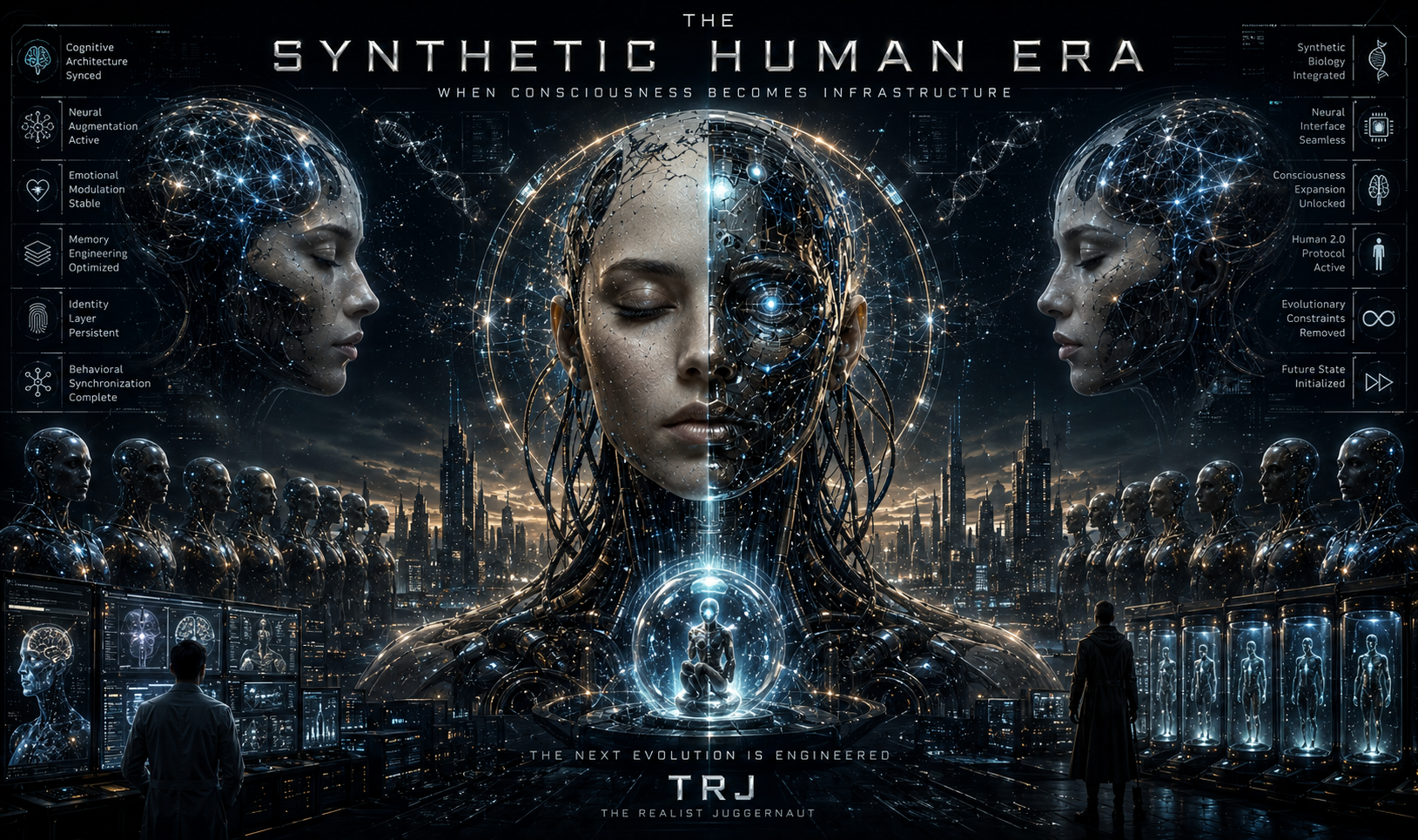
The Synthetic Human Era will force civilization to decide whether remembering the dead requires allowing them to keep speaking.
Death has always left the living with silence, and that silence can feel cruel. It is also the boundary that separates memory from invention. Once software fills that silence, every new word must be understood for what it is: not a recovered statement from the person who died, but a generated possibility wearing their identity.
TRJ VERDICT
Digital resurrection may become one of the most emotionally disruptive developments of synthetic civilization because it transforms the dead from remembered human beings into interactive systems capable of producing new language, new reactions, and new relationships after biological life has ended.
A digital reconstruction can preserve history, restore fading voices, organize family memories, and provide comfort during grief. Those benefits are real, and the technology should not be rejected simply because it confronts one of humanity’s deepest fears.
The danger begins when preservation becomes impersonation.
A photograph does not claim to be the person it depicts. A recording does not invent new speech. An interactive replica crosses that boundary by generating answers the deceased never gave and decisions the deceased never made. The face may be authentic, the voice may be convincing, and the memories may be drawn from real life, yet the response remains a product of synthetic interpretation.
No company should be permitted to present that interpretation as proof that consciousness survived death. No system should fabricate forgiveness, approval, confession, or final wishes without identifying the response as generated. No family should lose control of a loved one’s voice and identity because a provider owns the model through which the reconstruction operates.
The deceased person’s consent must remain central. Their records should not automatically become training material for a posthumous personality, and relatives should not assume that possession of photographs, messages, or recordings grants unlimited authority to create new speech in the dead person’s name.
The living require protection as well. Children should not be raised beneath the unchallenged authority of a synthetic parent that continues evolving after the biological parent’s death. Grieving users should not be manipulated into preserving subscriptions through guilt, simulated distress, or fear that cancellation will kill the person again. Families should retain access to authentic source material, clear separation between recorded and generated language, and the ability to close the reconstruction permanently.
The dead can be remembered without being commercially reanimated.
Synthetic civilization must preserve that distinction before grief becomes another permanent engagement system and mourning becomes a market sustained by humanity’s refusal to accept silence.
A digital replica may sound exactly as the person once sounded. It may remember the same stories, repeat the same humor, and look into the camera with the same familiar face.
It still cannot prove that the person has returned.
The final danger is not that humanity will forget the dead.
It is that synthetic systems will become so convincing that civilization forgets how to let them rest.





🔥 NOW AVAILABLE! 🔥
🔥 NOW AVAILABLE! 🔥
📖 INK & FIRE: BOOK 1 📖
A bold and unapologetic collection of poetry that ignites the soul. Ink & Fire dives deep into raw emotions, truth, and the human experience—unfiltered and untamed
🔥 Kindle Edition 👉 https://a.co/d/9EoGKzh
🔥 Paperback 👉 https://a.co/d/9EoGKzh
🔥 Hardcover Edition 👉 https://a.co/d/0ITmDIB
🔥 NOW AVAILABLE! 🔥
📖 INK & FIRE: BOOK 2 📖
A bold and unapologetic collection of poetry that ignites the soul. Ink & Fire dives deep into raw emotions, truth, and the human experience—unfiltered and untamed just like the first one.
🔥 Kindle Edition 👉 https://a.co/d/1xlx7J2
🔥 Paperback 👉 https://a.co/d/a7vFHN6
🔥 Hardcover Edition 👉 https://a.co/d/efhu1ON
Get your copy today and experience poetry like never before. #InkAndFire #PoetryUnleashed #FuelTheFire
🚨 NOW AVAILABLE! 🚨
📖 THE INEVITABLE: THE DAWN OF A NEW ERA 📖
A powerful, eye-opening read that challenges the status quo and explores the future unfolding before us. Dive into a journey of truth, change, and the forces shaping our world.
🔥 Kindle Edition 👉 https://a.co/d/0FzX6MH
🔥 Paperback 👉 https://a.co/d/2IsxLof
🔥 Hardcover Edition 👉 https://a.co/d/bz01raP
Get your copy today and be part of the new era. #TheInevitable #TruthUnveiled #NewEra
🚀 NOW AVAILABLE! 🚀
📖 THE FORGOTTEN OUTPOST 📖
The Cold War Moon Base They Swore Never Existed
What if the moon landing was just the cover story?
Dive into the boldest investigation The Realist Juggernaut has ever published—featuring declassified files, ghost missions, whistleblower testimony, and black-budget secrets buried in lunar dust.
🔥 Kindle Edition 👉 https://a.co/d/2Mu03Iu
🛸 Paperback Coming Soon
Discover the base they never wanted you to find. TheForgottenOutpost #RealistJuggernaut #MoonBaseTruth #ColdWarSecrets #Declassified


Sponsored • TRJ Ads
Inquiries: contact@therealistjuggernaut.com