Thank you for reading or listening to The Realist Juggernaut. Independent journalism should be accessible to everyone.
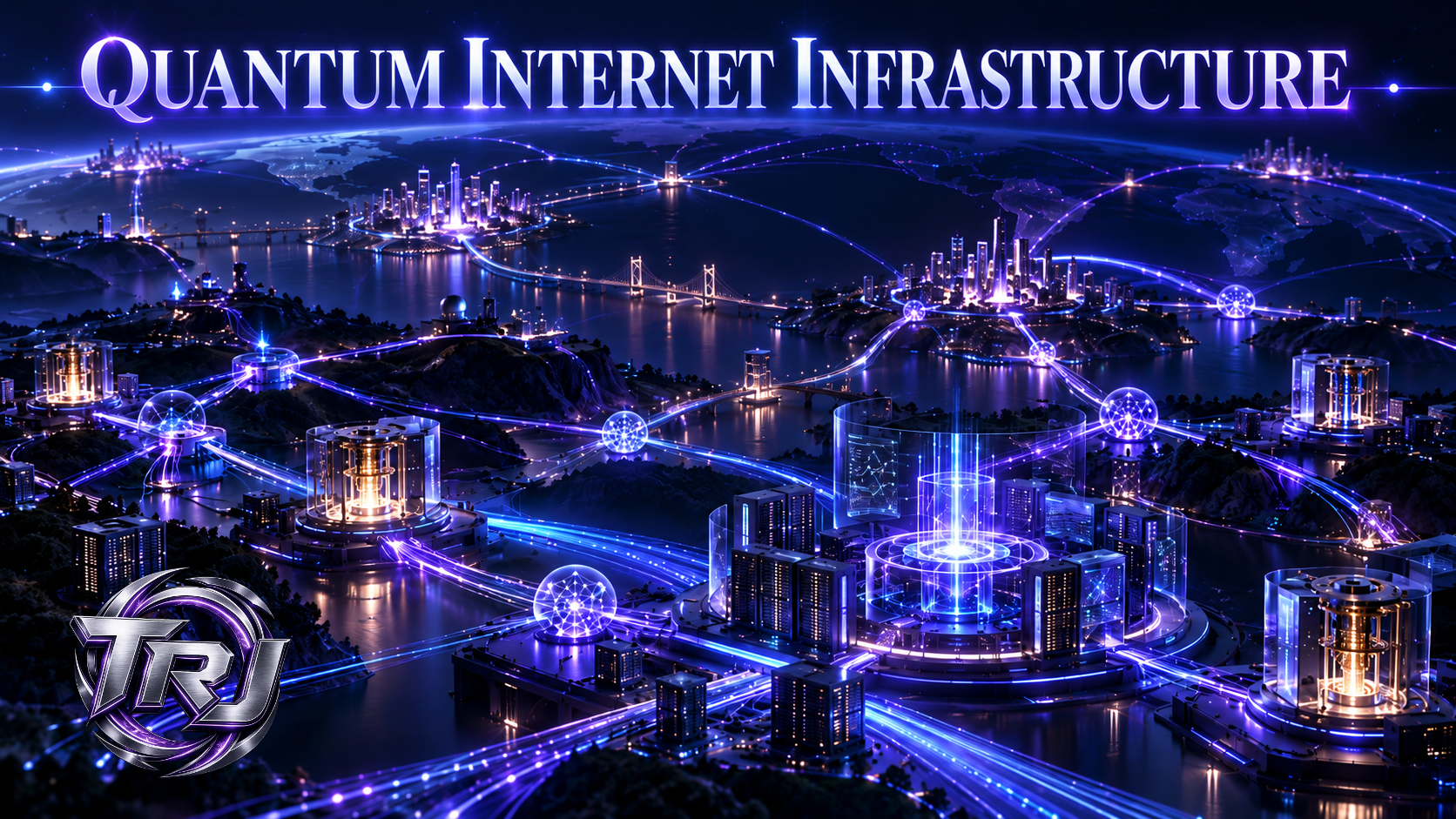
From local quantum communication networks and shared entanglement sources to programmable optical access systems, researchers are developing the infrastructure that could eventually connect universities, scientific laboratories, data centers, and authorized users to a larger quantum internet
The construction of a quantum internet presents an engineering challenge that extends beyond connecting distant cities, establishing long-distance communication backbones, and protecting networks against infrastructure failures. A global network cannot become a useful technological system unless the institutions, computing facilities, scientific instruments, and other authorized participants it is intended to serve can establish reliable connections to its resources. This introduces another essential component of quantum networking architecture: the access network, where physical quantum infrastructure meets the equipment and applications of individual users.
In conventional telecommunications, access networks connect homes, businesses, universities, and industrial facilities to regional and national communication infrastructure. These connections make the capabilities of larger networks available to individual organizations without requiring each participant to maintain its own long-distance backbone. Quantum networking will require a related arrangement, but the technology used to establish local access must accommodate the physical limitations of quantum information and the specialized equipment involved in transmitting, receiving, storing, and measuring quantum states.
The challenge is substantial because a quantum network endpoint is not necessarily a conventional computing device equipped with an optical connection. Depending on the application, the endpoint may contain single-photon detectors, quantum memories, specialized measurement equipment, or interfaces connecting an existing quantum processor to a photonic communication system. Some applications could operate through devices that immediately measure incoming photons, while others would require coherent quantum information to remain available for further processing. These differences determine what kind of access infrastructure must be provided and which services a particular user can receive.
Research has already demonstrated important elements of this emerging architecture. In 2025, scientists reported a measurement-device-independent quantum key distribution network capable of supporting simultaneous communication between multiple user pairs. Additional research demonstrated the coexistence of quantum and conventional optical signals within a four-user network. A separate study published in Nature Photonics in November 2025 and appearing in its 2026 volume demonstrated a reconfigurable eight-user quantum network constructed by connecting two local four-user systems through programmable photonic equipment.
These developments address a practical requirement that becomes more important as quantum networking expands. It is not enough to establish a quantum connection between two dedicated laboratory devices. Future networks must support multiple users whose equipment, applications, and resource requirements may differ, while maintaining the quantum properties needed for their intended operations.
The quantum network edge is where these requirements converge. Its successful development could determine whether advanced quantum infrastructure becomes accessible through shared services or remains concentrated in isolated research installations.
The Quantum Network Edge: Where Infrastructure Meets the User
The quantum network edge describes the portion of a network where participating devices connect to the larger communication system. In a future architecture, this could involve a university connecting several quantum processors, a research laboratory accessing a distant entanglement source, or an institution receiving quantum-generated cryptographic key material through specialized networking equipment.
The Quantum Internet Research Group addressed the basic structure of such systems in RFC 9340, Architectural Principles for a Quantum Internet, published in March 2023. The document identifies several categories of network components, including quantum routers, automated quantum nodes, end nodes, and conventional networking equipment. Its architectural framework establishes that not every quantum endpoint requires the same physical capabilities. An end node must be able to handle the quantum resource required by its application, but it does not necessarily need the equipment required to extend entanglement to other network nodes.
This is an important consideration for access-network engineering. A scientific facility that needs to measure incoming entangled photons may use a comparatively specialized receiving and detection arrangement. Another institution performing distributed quantum computation may require quantum memories, local processing qubits, and equipment capable of coordinating operations with remote processors. Both may connect to the same wider network architecture, but they cannot be assumed to support identical operations.
The design of access networks must therefore account for the capabilities of the devices being connected. An organization requesting quantum key distribution may need equipment optimized for cryptographic communication, while a laboratory investigating remote quantum operations requires a different relationship between its local processor and the network interface. Providing a physical optical path does not automatically establish that the receiving device can use every quantum resource available through the network.
The practical objective is to make network connectivity available through interfaces appropriate to the participating devices. Rather than requiring every institution to construct an independent long-distance quantum communications system, a shared access architecture could allow compatible endpoints to obtain resources through regional infrastructure. This would reduce unnecessary duplication of equipment while creating a foundation for broader institutional participation.
Why Shared Entanglement Sources Could Transform Local Networks
One approach to local quantum networking involves distributing entangled photons from a shared source to multiple participating users. Instead of requiring every pair of endpoints to maintain its own dedicated entanglement-generation equipment, a central facility can prepare suitable quantum states and distribute the photons through an optical network.
This architecture introduces an important possibility for connecting larger groups of users. A central source can supply entangled photon pairs through selected wavelength channels, while network equipment directs the appropriate channels toward participating endpoints. Users equipped with compatible detectors and measurement systems can then carry out supported quantum communication protocols.
The arrangement is particularly relevant to metropolitan facilities where several institutions operate within reach of shared optical infrastructure. Universities, scientific laboratories, and specialized computing centers could potentially connect through local distribution systems designed to provide access to common quantum resources.
The number of required connections becomes an important design consideration. A network containing several users can be arranged so that every user has a dedicated physical link to every other participant, but the complexity of such an arrangement grows as more users are added. Shared distribution architectures offer opportunities to reduce the number of independent physical components required while retaining the ability to establish connections between different user pairs.
Wavelength-division multiplexing provides one method of accomplishing this. The technique allows different optical wavelengths to travel through the same fiber, carrying separate communication channels. In quantum networking, appropriately designed wavelength channels can distribute selected entangled photon pairs to different endpoints without requiring each connection to occupy a separate physical cable.
The engineering challenge is ensuring that the optical distribution equipment preserves the required quantum correlations. Transmission loss, imperfect filtering, optical noise, and detector characteristics can affect the usefulness of the states delivered to users. The network must also ensure that the correct resources reach the intended endpoints and that participating measurement systems operate under compatible conditions.
A shared entanglement source therefore provides more than a way to reduce equipment duplication. It introduces an access model in which individual users can connect to centrally managed quantum resources rather than independently constructing every component needed for communication.
A Four-User Network Demonstrates Quantum and Classical Coexistence
A significant experiment published in npj Quantum Information in November 2025 demonstrated how multiple quantum users could share optical infrastructure with high-capacity conventional communications.
The research, titled Coexistence of Entanglement-Based Quantum Channels with DWDM Classical Channels over Hollow Core Fibre in a Four Node Quantum Communication Network, investigated a four-user architecture using specialized hollow-core optical fiber. The system combined entanglement-based quantum communication with conventional dense wavelength-division multiplexing, demonstrating that the two forms of transmission could operate within a shared physical environment under the experiment’s conditions.
Hollow-core fiber differs from conventional solid-core optical fiber because much of the transmitted light travels through an air-filled region rather than the glass material used in traditional fiber systems. This construction can reduce certain nonlinear optical interactions that contribute to unwanted noise, making it an interesting technology for applications where extremely weak quantum signals must coexist with stronger classical transmissions.
The researchers demonstrated three entanglement-based quantum channels operating alongside four classical optical channels carrying an aggregate data rate of 800 gigabits per second. The shared transmission environment included 11.5 kilometers of hollow-core fiber, with quantum and classical signals operating within the telecommunications C-band. The experiment also established quantum key distribution across the four-user network, reporting Bell-state fidelity as high as 90.0 percent, with an uncertainty of 0.8 percentage points.
The experimental arrangement used a central entangled photon source and a quantum-enabled reconfigurable optical add-drop multiplexer, commonly called a q-ROADM. This equipment combined wavelength-selective optical components, switching functions, and polarization compensation to distribute appropriate quantum channels among participating users.
The system’s architecture allowed the central source to support a fully connected arrangement between the four endpoints. Individual users could receive quantum states through assigned wavelength channels without requiring a separate entangled photon source for every possible connection. The researchers also reported that the secret key rates across the network links were maintained over 55 hours of experimental operation.
The achievement is significant for access-network development because it demonstrated several capabilities within one physical system: shared entanglement distribution, multiple user connections, optical channel allocation, and coexistence with substantial conventional communications traffic. It did not establish unrestricted quantum connectivity through every existing commercial fiber network, but it provided experimental evidence that carefully designed shared optical infrastructure can support both quantum and classical services.
This research highlights a practical consideration for future deployment. Access networks will be easier to integrate into existing facilities if their design accommodates conventional telecommunications equipment without sacrificing the performance of the quantum channels they are intended to deliver.
Measurement-Device-Independent Networking for Multiple Users
Quantum key distribution offers another opportunity to investigate how shared access infrastructure can serve several users without requiring every endpoint to operate as a completely independent communication system.
A study published in npj Quantum Information on June 9, 2025, described a measurement-device-independent quantum key distribution network using optical frequency comb technology. The research, led by Wenhan Yan and colleagues, investigated an architecture that combined wavelength multiplexing with measurement-device-independent quantum key distribution.
Measurement-device-independent QKD is designed to remove certain detector vulnerabilities from the security assumptions of the protocol. Instead of requiring communicating users to trust the measurement equipment performing a central detection operation, the protocol can establish secure keys under appropriate assumptions even when the intermediate measurement station is untrusted.
This characteristic is relevant to shared network infrastructure because several participants may rely on equipment operated by another organization. A properly implemented measurement-device-independent protocol can reduce the security assumptions associated with that central measurement equipment, although the users must still protect their own devices, authentication mechanisms, and surrounding software.
The researchers used integrated optical frequency combs to generate suitable communication channels and implemented a fully connected, multi-user network architecture. Their experiment achieved an average secure key rate of 267 bits per second under approximately 30 decibels of link attenuation per user pair. They also demonstrated simultaneous communication between two different pairs of users, showing that the architecture could support more than one cryptographic exchange during the same operating period.
The reported key rate was more than three orders of magnitude higher than the previous entanglement-based implementations used for comparison in the study. That result reflected the performance of the specific protocol and experimental conditions rather than a universal advantage over all other QKD systems.
The simultaneous operation is especially important from an access-network perspective. Shared quantum infrastructure must eventually support multiple requests without requiring every user to wait for all other communication activity to stop. The ability to allocate separate optical resources to different pairs of users provides an experimental foundation for more efficient use of common equipment.
This architecture also demonstrates why quantum access networks will not all provide identical services. Measurement-device-independent QKD is intended to establish cryptographic keys, while entanglement-based communication systems may support broader classes of quantum information tasks. Their underlying infrastructure can share certain optical technologies, but their delivered capabilities and security requirements remain distinct.
Connecting Two Local Networks Through Programmable Photonics
One of the clearest demonstrations of how local quantum access systems could eventually connect to larger infrastructure appeared in research published in Nature Photonics on November 26, 2025, under the title A Large-Scale Reconfigurable Multiplexed Quantum Photonic Network. The study described a prototype architecture connecting two local four-user networks into a reconfigurable eight-user system.
The researchers investigated a central challenge facing multi-user quantum infrastructure: establishing flexible connections between participants belonging to separate local networks. Within a small local environment, entangled photons can be distributed through shared optical equipment. Connecting two such environments requires additional operations capable of extending quantum correlations between users located in different network segments.
The experimental system employed an eight-dimensional programmable multiport optical circuit. Its architecture exploited the mixing of optical spatial modes within multimode fiber, combined with programmable phase elements that enabled the researchers to implement selected quantum operations. The system supported flexible routing and entanglement swapping across different user configurations.
The researchers connected two four-user networks and demonstrated the distribution of entanglement between selected endpoints in different arrangements. They reported entanglement fidelities exceeding 76 percent relative to the targeted maximally entangled states across the examined network configurations and channels. The apparatus also demonstrated operations involving three-dimensional quantum states, known as qutrits, illustrating the flexibility of the optical system beyond two-dimensional qubit encoding alone.
An important feature was its ability to perform multiplexed operations. Rather than creating only one fixed connection between designated endpoints, the programmable arrangement could support different communication relationships among participating users. In selected configurations, it also allowed simultaneous entanglement swapping across independent channels.
The researchers described the system as a prototype global reconfigurable network because it demonstrated the architectural principle of interconnecting local multi-user networks. The experiment was conducted using specialized photonic equipment and did not establish an operational global fiber infrastructure connecting eight geographically distant institutions.
Its significance lies in the mechanism demonstrated. Local quantum networks need not remain isolated collections of users served by separate entanglement sources. With compatible optical interfaces and programmable operations, resources generated within distinct local systems can be connected to support quantum communication between selected endpoints.
This provides an experimental model for a future hierarchy in which local quantum access networks connect through intermediate infrastructure to regional and eventually longer-distance systems. The major advancement is the demonstrated flexibility of the connection architecture, rather than the physical geographical scale of the experiment.
Quantum Access Does Not Require Every User to Own a Quantum Computer
One of the most important implications of quantum access-network research is that different applications can participate through devices with substantially different capabilities.
A quantum internet endpoint does not necessarily need to contain a large quantum processor or a sophisticated memory system. For certain communication protocols, the receiving equipment may perform measurements on incoming photons and process the results through conventional electronics. Such devices can participate in supported quantum cryptographic operations without maintaining a large register of computational qubits.
Other applications impose more demanding requirements. A laboratory seeking to establish entanglement between separate quantum processors must have suitable hardware for storing or manipulating the received quantum information. The interface between the local processor and the network becomes part of the application architecture, with performance determined by the compatibility of the participating systems.
This variation creates opportunities for different classes of network access. An institution may need only specialized cryptographic communication equipment, while a research center could operate more capable quantum nodes that support experiments involving stored entanglement or remote quantum operations. Shared infrastructure could potentially serve both classes of users through distinct supported services.
The development of access tiers would also influence network economics. Institutions should not need to purchase hardware that offers capabilities unrelated to their intended applications. A university conducting quantum cryptographic experiments may have different requirements from a facility developing distributed quantum algorithms, and the cost of connecting those institutions should reflect their actual resource needs.
This does not mean quantum networking is ready for consumer devices comparable to present-day wireless routers. Quantum communication generally requires specialized optical and measurement technologies, and the feasibility of compact, low-cost access equipment depends on continued hardware development. The immediate opportunity lies in connecting qualified institutional users through shared infrastructure and standardized interfaces.
The broader principle is that participation in a quantum network should be determined by the requirements of the application, rather than by an assumption that every endpoint must possess the full capabilities of an advanced quantum computer.
The Engineering Requirements of a Quantum Access Point
A practical quantum access point must bridge the capabilities of local equipment with those of the larger network. This responsibility introduces requirements involving physical connectivity, optical signal management, resource identification, equipment calibration, and application authorization.
At the physical level, the access equipment must support the type of quantum signal used by the service. A photonic system may require wavelength compatibility, precise filtering, suitable detector efficiency, and optical connections that maintain acceptable transmission performance. A device connected to a quantum memory may introduce additional requirements involving photon bandwidth, frequency conversion, and synchronization with local quantum operations.
The access equipment must also coordinate with conventional networking infrastructure. Quantum communication protocols commonly depend on classical information for authentication, measurement interpretation, session coordination, and the exchange of operational results. The classical and quantum components of an access system must work together without introducing unacceptable delays or exposing sensitive information through poorly protected control interfaces.
Security is another essential consideration. A shared access environment must distinguish legitimate requests from unauthorized activity and prevent one user from interfering with resources assigned to another. Quantum-specific security properties do not remove the need for access controls, secure software, equipment monitoring, and physical protection of the installation.
The architecture must also accommodate different workloads. Some users may request periodic cryptographic key material, while others may need short, scheduled communication sessions involving specialized quantum states. A future service environment would need to identify the resources supported by each endpoint and determine whether the requested operation is compatible with the available equipment.
These requirements are separate from the long-distance transmission challenges examined in earlier stages of quantum networking research. The access point must function correctly at the boundary between the user’s system and the network, where equipment limitations and application expectations become immediate operational concerns.
Its successful development would create a more practical relationship between complex quantum infrastructure and the institutions expected to use it.
The Institutional Quantum Network Comes Before the Consumer Network
The earliest widely usable quantum access networks are more plausibly institutional systems than residential communication products. Scientific laboratories, universities, data centers, telecommunications research facilities, and other specialized organizations already have reasons to investigate quantum communication capabilities and maintain personnel qualified to operate advanced equipment.
A university campus, for example, could connect separate research laboratories through a shared optical network, allowing approved experiments to obtain access to compatible quantum communication resources. A regional research consortium might establish access nodes at participating institutions and connect them through metropolitan fiber infrastructure. A computing center could eventually provide specialized interfaces for approved remote quantum operations, depending on the capabilities of its processors and network links.
These arrangements provide opportunities to develop operational experience before introducing more demanding deployment models. Shared facilities can collect performance information, identify recurring equipment problems, evaluate maintenance requirements, and determine whether particular services justify their operating costs.
Research infrastructure is already moving in this direction. In June 2025, the Fraunhofer Institute for Laser Technology announced that it had begun operating a quantum internet research node developed with the Netherlands Organisation for Applied Scientific Research, TNO. The equipment was intended to support local experimentation with research and industrial partners, with particular attention to photonic components and compatibility with broader European quantum networking efforts.
The Fraunhofer installation illustrates an institutional access model in which a specialized quantum node becomes available for collaborative experiments rather than functioning exclusively as an isolated laboratory apparatus. Its development does not establish unrestricted public access to quantum communication services, but it demonstrates how research facilities can begin building the local infrastructure needed for future integration.
As these environments develop, the practical questions will extend beyond hardware performance. Institutions will need to determine how access is granted, which services can be shared, how operating costs are allocated, and what procedures are necessary to support users without requiring constant experimental intervention.
The progression toward broader access will depend on the results of these institutional deployments. Reliable equipment, reproducible services, lower operating costs, and mature software interfaces will be essential before quantum network connectivity can become available to a substantially larger community.
From Specialized Connections to Accessible Quantum Infrastructure
The development of quantum network access represents a shift in how future infrastructure could be organized. Rather than treating every participating institution as an independently constructed experiment, shared access systems provide a foundation for distributing selected quantum resources through a common network.
This does not eliminate the need for advanced scientific equipment. Quantum processors, specialized memories, and sophisticated optical interfaces will remain necessary for applications that depend on their capabilities. The value of access-network development lies in establishing a practical method for connecting those systems without requiring every user to duplicate the infrastructure that supports them.
Experiments involving four-user and eight-user networks demonstrate that flexible quantum connectivity can be created through carefully designed optical arrangements. Measurement-device-independent cryptographic research shows that shared infrastructure can support simultaneous communication between different user pairs. Research involving quantum and classical coexistence establishes additional possibilities for integrating these systems with conventional telecommunications technology.
Together, these achievements demonstrate progress toward an architecture in which network resources can be shared across multiple endpoints. They also establish the engineering limits that future development must address, including endpoint compatibility, equipment complexity, optical losses, application requirements, and the costs associated with maintaining specialized infrastructure.
The next major advances will need to establish whether such systems can operate beyond individual demonstrations while supporting users with different equipment and resource demands. Their development will require coordinated progress in optical engineering, quantum hardware, software interfaces, security, and network administration.
The long-term objective is a network in which a compatible institution can connect through an appropriate local interface and obtain defined quantum capabilities without constructing an entire communication system around each application.
TRJ VERDICT
The development of quantum network access represents an essential stage in determining whether the future quantum internet can become useful beyond the research facilities responsible for creating its underlying technologies. Long-distance optical connections, metropolitan testbeds, and advanced quantum networking equipment provide the physical foundation, but those systems must ultimately make their capabilities available to participating users through practical and reliable access arrangements.
These achievements establish distinct components of the access-network challenge. Shared entanglement sources can reduce equipment duplication, optical multiplexing can support multiple communication channels, and programmable interfaces can create different connections between participating users. Each capability contributes to making local quantum infrastructure more useful and adaptable.
The practical importance of this development extends into the organization of future scientific and industrial networks. Not every participating institution will require an identical quantum processor, communication interface, or memory system. The equipment needed to access a quantum service should reflect the actual capabilities of the application, allowing specialized resources to be shared where the underlying technology permits.
Significant engineering requirements remain before quantum access can become routine. Endpoint compatibility, optical performance, security, equipment costs, and sustained operational reliability must be established through physical implementations. The most immediate opportunities involve institutional networks capable of supporting scientific research, specialized communications, and controlled access to quantum resources.
The Realist Juggernaut concludes that the future quantum internet will not be defined solely by how far its backbone connections extend or how many advanced processors it can connect. Its practical value will also depend on whether institutions and authorized users can obtain access to its capabilities through reliable, compatible, and economically sustainable infrastructure. The quantum network edge is where the achievements of advanced quantum engineering must become accessible services, establishing the connection between experimental technology and the people and organizations it is intended to serve.





🔥 NOW AVAILABLE! 🔥
🔥 NOW AVAILABLE! 🔥
📖 INK & FIRE: BOOK 1 📖
A bold and unapologetic collection of poetry that ignites the soul. Ink & Fire dives deep into raw emotions, truth, and the human experience—unfiltered and untamed
🔥 Kindle Edition 👉 https://a.co/d/9EoGKzh
🔥 Paperback 👉 https://a.co/d/9EoGKzh
🔥 Hardcover Edition 👉 https://a.co/d/0ITmDIB
🔥 NOW AVAILABLE! 🔥
📖 INK & FIRE: BOOK 2 📖
A bold and unapologetic collection of poetry that ignites the soul. Ink & Fire dives deep into raw emotions, truth, and the human experience—unfiltered and untamed just like the first one.
🔥 Kindle Edition 👉 https://a.co/d/1xlx7J2
🔥 Paperback 👉 https://a.co/d/a7vFHN6
🔥 Hardcover Edition 👉 https://a.co/d/efhu1ON
Get your copy today and experience poetry like never before. #InkAndFire #PoetryUnleashed #FuelTheFire
🚨 NOW AVAILABLE! 🚨
📖 THE INEVITABLE: THE DAWN OF A NEW ERA 📖
A powerful, eye-opening read that challenges the status quo and explores the future unfolding before us. Dive into a journey of truth, change, and the forces shaping our world.
🔥 Kindle Edition 👉 https://a.co/d/0FzX6MH
🔥 Paperback 👉 https://a.co/d/2IsxLof
🔥 Hardcover Edition 👉 https://a.co/d/bz01raP
Get your copy today and be part of the new era. #TheInevitable #TruthUnveiled #NewEra
🚀 NOW AVAILABLE! 🚀
📖 THE FORGOTTEN OUTPOST 📖
The Cold War Moon Base They Swore Never Existed
What if the moon landing was just the cover story?
Dive into the boldest investigation The Realist Juggernaut has ever published—featuring declassified files, ghost missions, whistleblower testimony, and black-budget secrets buried in lunar dust.
🔥 Kindle Edition 👉 https://a.co/d/2Mu03Iu
🛸 Paperback Coming Soon
Discover the base they never wanted you to find. TheForgottenOutpost #RealistJuggernaut #MoonBaseTruth #ColdWarSecrets #Declassified


Sponsored • TRJ Ads
Inquiries: contact@therealistjuggernaut.com